Houses
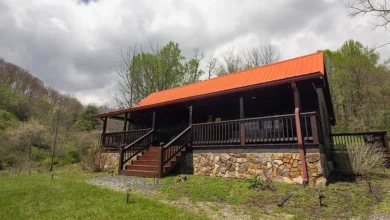
Off-grid Amish-style barndominium on 41.5 acres with a creek, fenced pasture, a 3-stall barn and mountain views near Monterey, Virginia

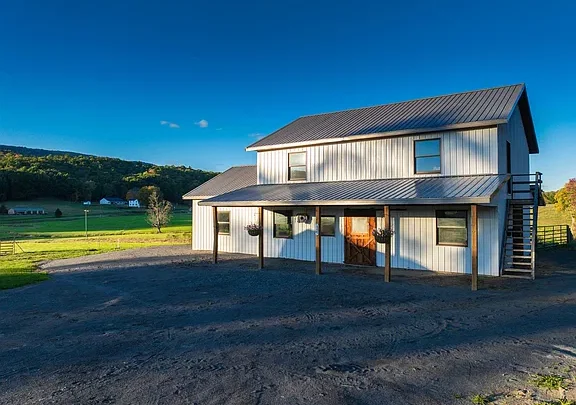
Some listings are about the house. This one is about the land, the water, the barn and the way of life that comes with them.
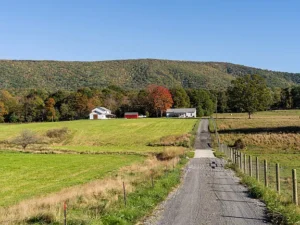
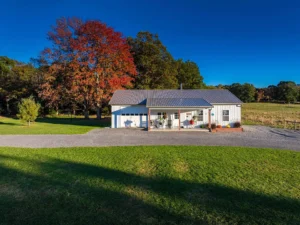
At 2059 Jackson River Road, just two miles outside the small town of Monterey in Highland County, Virginia, a 2022-built barndominium sits on 41.5 acres of pasture, woods and creek frontage. It is fully off-grid, built in an Amish style, and priced at $499,000.
For the right buyer, that combination is rare. For the wrong buyer, it could be a hard adjustment. Let’s walk through what is actually here, what it would take to live on it, and the questions worth asking before making an offer.
Property Overview
- Price: $499,000
- Address: 2059 Jackson River Rd, Monterey, VA 24465
- Bedrooms: 3
- Bathrooms: 1
- Living area: approximately 1,300 sq ft
- Year built: 2022
- Lot size: 41.5± acres
- Approximately 18 wooded acres and 22 acres of fenced pasture
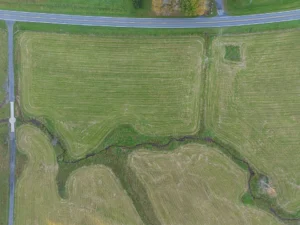
- Straight Creek flows through the front of the property
- 994 feet of public road frontage on Jackson River Road
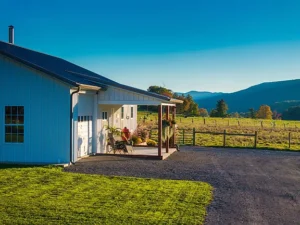
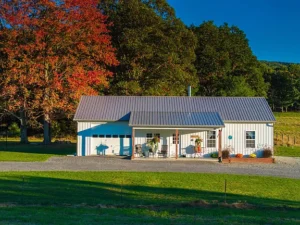
- Amish-style barndominium with attached garage
- Wood-burning stove heat, propane cooking stove
- Well and septic powered by a gas-powered air compressor
- Existing power easement runs through the property
- Approximately 1,500 sq ft, 3-stall barn with lean-tos and hay loft
- Cell phone service available
- Showing by appointment only, 24-hour notice required
The Setting: Highland County, Virginia
Highland County is one of the least populated counties east of the Mississippi River. It sits high in the Allegheny Mountains along the West Virginia line, and locals often call it Virginia’s Switzerland because of its elevation, cool summers and open mountain valleys.
Monterey is the county seat. It is a small, quiet town with the basics: a post office, a few shops and restaurants, county offices and a strong sense of community.
The area is best known for the Highland Maple Festival each spring, when sugar camps open to visitors and the valleys fill with people coming for maple syrup and buckwheat cakes.
Being only two miles from town is a real advantage here. Many off-grid properties are tucked far back on gravel roads, miles from anything. This one gives you the isolation of 41 acres while keeping groceries, mail and neighbors within a short drive.
The Home: An Amish-Style Barndominium
The house is an approximately 1,300 sq ft barndominium built in 2022. Barndominiums combine the efficient structure of a barn with the comfort of a full home, and they have become one of the most popular building styles for rural buyers in recent years.
The Amish-style approach usually means simple, practical construction designed to work without relying on the electric grid. That fits this home perfectly, since it was built from the start for off-grid living.
A 2022 build year is also worth noting. Many off-grid homes on the market are older cabins or converted structures. A newer build means the roof, framing, windows and finishes should all be in early stages of their lifespan, assuming the construction quality holds up under inspection.
Bedrooms
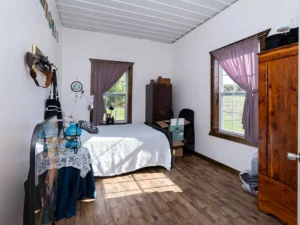
There are three bedrooms in the home. In a 1,300 sq ft layout, they are likely modest in size, but three bedrooms give real flexibility.
A couple could use one as a primary bedroom, one as a guest room and one as a home office, pantry or storage room for canning supplies and seed stock. A small family could fit comfortably.
Bathroom
The home has one full bathroom. For a small household, that is usually manageable. For a family of four or five, it can become a daily scheduling challenge.
Because the water system runs on a gas-powered air compressor, buyers should ask how water pressure and hot water are handled in the bathroom. Off-grid hot water can come from propane on-demand heaters, wood stove coils or other setups, and the listing does not say which method is used here.
Living Space
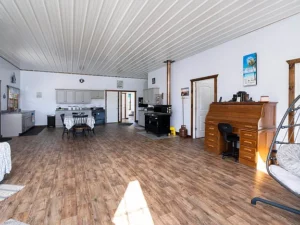
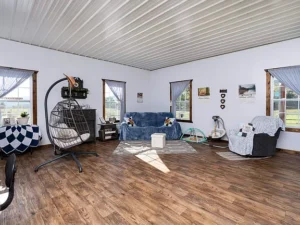
Barndominiums often feature open main living areas, with high ceilings and a combined living room, dining space and kitchen. That style works especially well with wood heat, since one central stove can warm a large shared space.
Photos and an in-person showing will tell you how much natural light the home gets. In an off-grid home, good daylight is more than a design feature. It reduces the need for lamps and lanterns during the day.
Kitchen
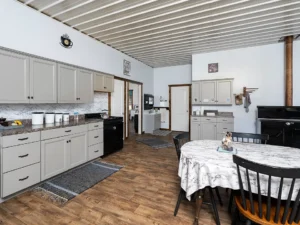
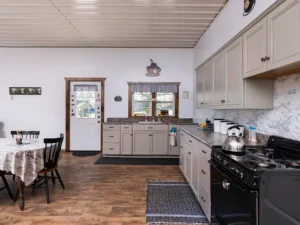
Cooking is handled by a propane stove. Propane is one of the most reliable fuel sources for off-grid kitchens, and many rural households in Virginia already depend on it.
Buyers should ask about refrigeration. Without grid power, food storage usually relies on a propane refrigerator, an ice box, a root cellar or a solar setup. Knowing what currently conveys with the home will help you budget for any changes.
Heating: Wood-Burning Stove
Heat comes from a wood-burning stove. With roughly 18 wooded acres on the property, you may be able to supply a large share of your own firewood over time, which is one of the biggest cost savings of rural living.
Highland County winters can be cold and snowy because of the elevation. A single wood stove can heat a 1,300 sq ft home well, but only if the home is properly insulated and the stove is correctly sized.
Ask how much wood the current owners burn each winter, whether the stove has been inspected, and how the chimney and flue are maintained. Insurance companies will often want these details as well.
Water and Septic: Powered by a Gas Air Compressor
This is the most unusual feature of the property, and the one that deserves the most attention during your due diligence.
The well and septic system are powered by a gas-powered air compressor. Systems like this are sometimes used in Amish communities to move water without electricity. They can be dependable, but they work very differently from a standard electric well pump.
Questions to ask include how often the compressor runs, how much fuel it uses each month, what happens if it fails during winter, and whether a backup is in place. You should also ask whether a licensed well contractor could convert the system to an electric pump later if power is brought to the home.
A full water test for bacteria, nitrates and minerals is a must. A septic inspection is equally important, even on a 2022 system.
Electricity: Off-Grid With a Path to the Grid
The home is not connected to electric service. But there is an existing power easement running through the property, which gives a potential option for bringing electricity to the house in the future.
That is a meaningful detail. Many buyers love the idea of off-grid living but want the security of knowing they can connect later. An easement on the property can make that far less expensive than running a new line from a distant road.
Before you buy, contact the local electric provider and request an estimate. Ask about the distance from the easement to the house, the cost of the line extension, any transformer requirements and the timeline for installation.
Another path is solar. A properly sized solar and battery system could power lighting, refrigeration, a well pump and small appliances, while keeping the property independent.
Cell Service and Connectivity
The listing notes that cell phone service is available. In the mountains of western Virginia, that is not always a given.
If you plan to work remotely, check signal strength in person at different spots on the property. You may also want to look into satellite internet options, which have become much more practical for rural homes in recent years.
The Attached Garage
The barndominium includes an attached garage. On a working farm, that space is valuable for vehicles, tools, a workshop, a generator, or storage for feed and equipment.
An attached garage also means you can unload groceries and supplies out of the weather, which matters during snowy Highland County winters.
The Barn
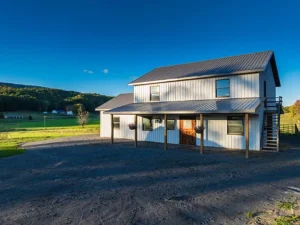
The property includes an approximately 1,500 sq ft, 3-stall barn with lean-tos on both sides and a hay loft on the second story.
This is a true working barn. The three stalls suit horses, cattle, goats or other livestock. The lean-tos provide covered space for equipment, firewood or animal shelter, and the hay loft lets you store feed right where you need it.
Building a barn like this today would be a significant expense, so it adds real value to the overall price.
The Land: 41.5 Acres
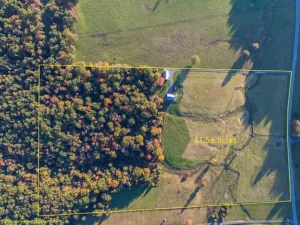
The acreage is the heart of this listing. The property offers 41.5± acres, split roughly into 18 wooded acres and 22 acres of fenced pasture.
That balance is ideal for homesteading. The pasture supports grazing livestock or hay production, while the woods offer firewood, privacy, wildlife habitat and potential hunting.
Fenced Pasture
Approximately 22 acres are already fenced. Fencing is one of the most expensive and labor-intensive parts of setting up a farm, so having it in place saves time and money.
Walk the fence line before buying. Check posts, wire tension, gates and any damaged sections, and ask what type of fencing is used and what livestock it was designed for.
Woods
About 18 acres are wooded. Beyond firewood, woodland gives shade, windbreaks, and a natural boundary from the road and neighboring properties.
Highland County is known for its wildlife, and wooded land often attracts deer and turkey. If hunting matters to you, check state regulations and seasons before planning.
Straight Creek
Straight Creek flows through the front portion of the property. Running water adds beauty, a natural water source for livestock and a peaceful sound that many rural buyers value highly.
Buyers should check FEMA flood maps and ask about any history of flooding near the creek. Mountain streams can rise quickly after heavy rain or snowmelt.
Views and Road Frontage
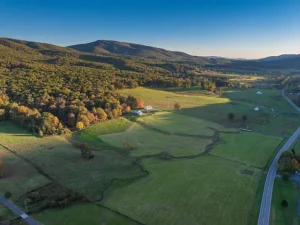
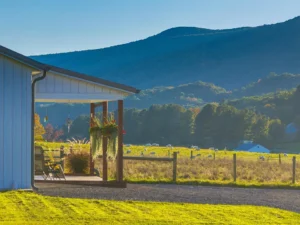
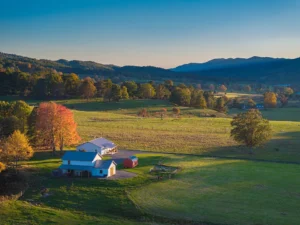
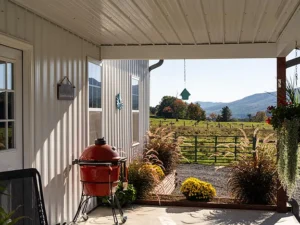
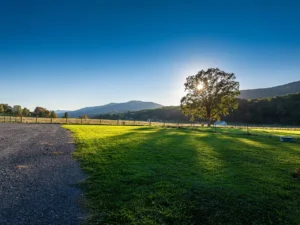
The listing describes panoramic mountain and valley views, which is exactly what Highland County is known for.
The property also has 994 feet of public road frontage along Jackson River Road. Public road access means no shared private driveway agreements, and it simplifies year-round access, mail delivery and emergency services.
Living Here as an Owner-Occupant
This property is built for someone who wants a self-sufficient lifestyle. That could be a family starting a small livestock operation, a couple retiring to the mountains, or someone who simply wants space, quiet and independence.
Daily life here is different from a suburban home. You will split and stack firewood, manage propane deliveries, keep the compressor fueled and maintained, and care for animals and fencing.
For many people, that work is the point. It is a chance to live closer to the land and depend less on outside systems.
Rental and Income Potential
Highland County draws visitors for the Maple Festival, fall foliage, fishing, hunting and quiet mountain getaways. An off-grid farm stay could appeal to travelers looking for a unique experience.
The pasture could also generate income through grazing leases or hay sales. Before planning any short-term rental, check county zoning and permit rules, and talk with an insurance agent about coverage for guests on a working farm.
Potential Upgrades and Improvements
- Bringing electric service to the home through the existing easement
- Installing a solar and battery system
- Adding a second bathroom
- Converting the well to an electric or solar pump
- Adding a backup heat source for long winter absences
- Building a root cellar or larger food storage area
- Expanding gardens, orchards or chicken housing
- Upgrading internet with a satellite service
- Adding gutters and rain catchment for livestock water
Financing Options
Financing an off-grid farm can be more complicated than financing a standard home, so start conversations with lenders early.
USDA Loans
Highland County is rural, and USDA Rural Development loans can offer low or no down payment options for eligible buyers. However, USDA loans have property standards, and some lenders may require the home to have dependable utilities. The off-grid setup could create challenges, so ask a USDA-approved lender before relying on this option.
FHA Loans
FHA loans allow lower down payments, but appraisers look closely at heat sources, water safety and overall habitability. The off-grid systems here would need to meet FHA guidelines.
VA Loans
Eligible veterans may be able to buy with no down payment. VA appraisals also have minimum property requirements, so the same questions about utilities and water apply.
Conventional Loans
Conventional loans offer more flexibility on property type, especially with a larger down payment. Some lenders also limit how much acreage they will finance at standard terms.
Farm Credit and Land Loans
Farm Credit lenders specialize in rural properties and agricultural land. For a 41.5-acre farm with pasture and a barn, a farm lender may be the most natural fit.
FHA 203(k) Renovation Loans
If you plan to bring electricity to the home or make major upgrades, a renovation loan could let you combine the purchase and improvement costs into one mortgage, depending on the lender and project.
Insurance Considerations
Insurance for an off-grid farm needs careful shopping. Wood stoves, propane appliances, a gas compressor and a working barn all affect coverage and premiums.
Ask insurers about farm and ranch policies rather than a standard homeowners policy. These usually cover outbuildings, livestock liability and farm equipment.
Distance to the nearest fire station and fire hydrant also affects rates. Being close to Monterey may help, but get quotes before closing.
Due Diligence Questions to Ask
- How does the gas-powered air compressor run the well and septic, and how much fuel does it use?
- Is there a backup water system if the compressor fails?
- How is hot water produced?
- What refrigeration does the home use?
- What would it cost to connect electricity using the existing easement?
- Who holds the power easement, and what are its terms?
- Has the wood stove and chimney been inspected?
- What were the building permits and inspections for the 2022 construction?
- Has the well water been tested recently?
- Is any part of the property in a flood zone near Straight Creek?
- What is the condition of the fencing?
- What is the property’s zoning, and are there restrictions on livestock or rentals?
- Are there any land use tax programs in place for agricultural use?
- What are the annual property taxes?
- Is the road maintained by the state year-round, including snow removal?
Inspection Is Essential
A newer build does not mean an inspection is optional. Off-grid homes have systems many standard home inspectors rarely see.
Hire a general home inspector, but also bring in specialists: a well contractor, a septic inspector, a chimney sweep for the wood stove, and a propane technician to check lines and appliances.
A land survey is also worth considering on a 41.5-acre property, especially to confirm boundaries, the creek location and the road frontage.
The Price in Context
At $499,000 for about 1,300 sq ft of living space, the price works out to roughly $384 per square foot. Looked at that way, it can seem high.
But this listing is not really priced on the house alone. The buyer is getting 41.5 acres, 22 fenced acres of pasture, a creek, mountain views, nearly 1,000 feet of road frontage, a 1,500 sq ft barn and a 2022 home, all two miles from town.
Recreating all of that on raw land would require buying acreage, drilling a well, installing septic, fencing pasture, building a barn and constructing a home. Many buyers would spend well beyond this price trying to do it from scratch.
Compare it with other recent listings in Highland County, and ask your agent for sales of similar acreage farms with homes. That will give you a better sense of whether the price fits the local market.
Who This Property Is For
This farm suits buyers who want to raise animals, grow food and live with fewer utility bills. It suits people who value quiet, open space and mountain views more than square footage.
It may not suit someone who wants a turnkey, plug-in lifestyle with no learning curve. Off-grid living requires routine work and a willingness to solve problems on your own.
Final Thoughts
2059 Jackson River Road is a rare kind of listing. It offers a newer Amish-style barndominium, a real working barn, fenced pasture, woods, a creek and wide mountain views on 41.5 acres in one of Virginia’s most peaceful counties.
The off-grid systems are the biggest question mark and the biggest attraction at the same time. The existing power easement gives future owners a valuable choice: stay fully independent or connect to the grid later.
For buyers ready to embrace homesteading, this property could be a strong foundation for a self-sufficient life in the Allegheny Mountains. Just take the time to understand every system before you sign.
View the full listing on Zillow: 2059 Jackson River Rd, Monterey, VA 24465
Our website is designed for informational and entertainment purposes only. We are not a real estate brokerage or licensed contracting service. We operate solely as an independent blog, curating interesting houses, DIY guides, and practical home tips found across the internet. All decisions related to real estate transactions or home renovations should be made in consultation with licensed professionals. We do not guarantee the ongoing accuracy or availability of external property listings, as market statuses change rapidly. Please use our content at your own discretion.