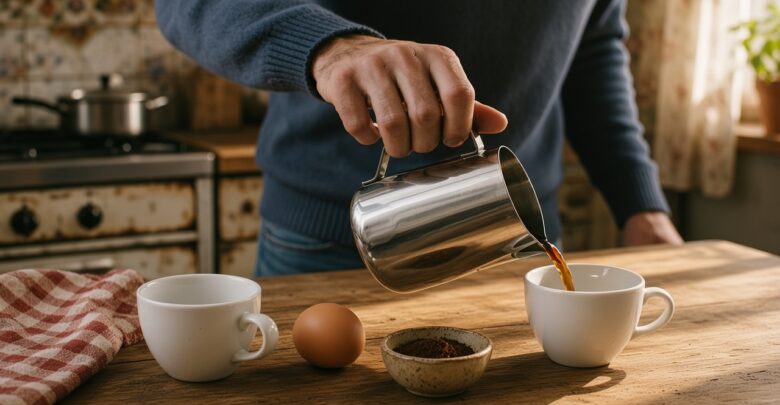
Some kitchen secrets sound reasonable the moment you hear them. A little cinnamon here, a splash of milk there. Then there is the ingredient in this old-fashioned coffee method, which tends to make people stop mid-sentence.
It is an egg. Yes, an actual egg goes into the coffee grounds before brewing. Not as a breakfast side dish and not as a creamy topping. It plays a part in preparing the drink itself.
This is Scandinavian egg coffee, sometimes called Swedish coffee, Norwegian coffee, or church coffee. The surprising idea is worth understanding before you decide whether to try it. And no, you do not have to put eggshell in your next mug.

The Secret Ingredient in Scandinavian Egg Coffee
The Homemaking story connects this method with family memories and community gatherings. Its writer describes a cup that tastes smoother and less bitter than their usual brew. That is their experience, not a promise that every coffee drinker will agree.
Unlike a drink made by stirring raw egg into finished coffee, this method cooks a mixture of grounds and egg in a pot of hot water. The cooked mixture is then separated from the liquid before serving.
That difference is the whole point. You are not aiming for a floating breakfast scramble. You want brewed coffee in the cup, with the spent grounds and cooked egg left behind.
What the Egg Is Doing
When heated, egg proteins set. In this brewing method, that cooked egg helps bring the grounds together into clumps that can be removed. Think of the egg as a helper in separating material from the drink, rather than a flavoring.
The source calls the effect clarifying. That word sounds grand, but the practical picture is simple: a pot with a mass of egg and grounds, followed by a straining step that keeps that material out of your cup.
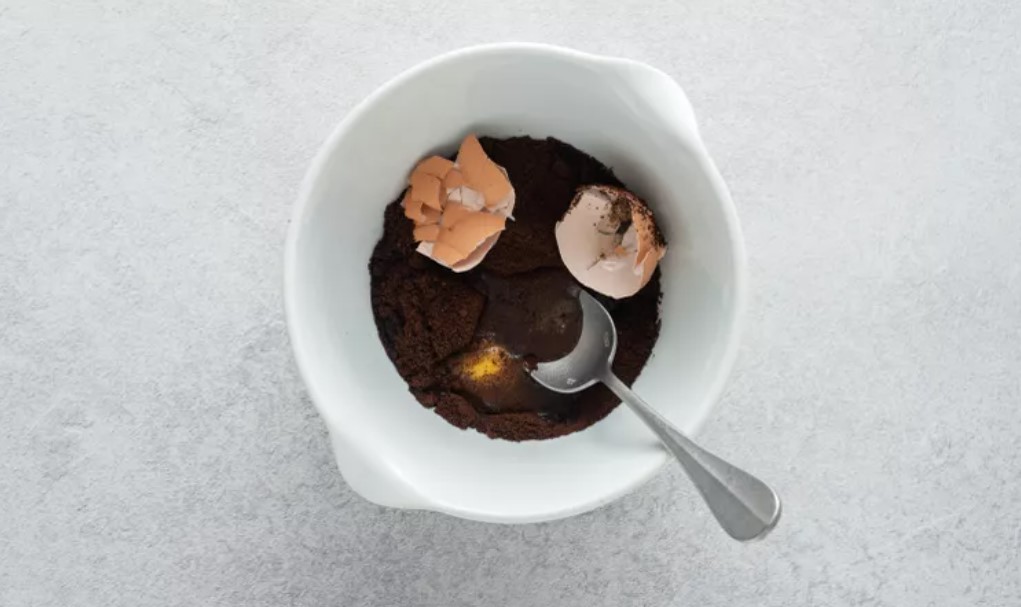
The original recipe includes the shell and describes it as helping reduce acidity. We are not treating that as a measured result or a reason to add shell. Our suggested approach leaves the shell out and focuses on the egg-and-grounds technique.
Most importantly, a cup that tastes less harsh is not automatically a treatment for reflux or any other condition. Taste, caffeine, and how your stomach responds are separate questions. Enjoy the tradition as a food experiment, not a health fix.
Set Out a Small Test Batch
The source uses a modest amount of coffee, which makes this an approachable experiment rather than a giant breakfast commitment. Here is its basic ingredient framework, adapted to omit the shell:
- 3 tablespoons ground coffee
- 1 egg, without the shell; a pasteurized egg is an extra precaution
- 3 tablespoons water for mixing
- 3 cups water for the pot
- 1 cup cold drinking water added after cooking
You will also want a saucepan with room for foaming, a mixing bowl, a spoon, a heatproof serving jug, and a fine strainer. A food thermometer helps you check the egg mixture instead of relying only on a timer.
Use the coffee you already like. This is a different brewing method, not a request to replace every bean in your cupboard. Keeping the coffee familiar also makes it easier to decide what you think of the result.
Mix, Heat, and Watch the Pot
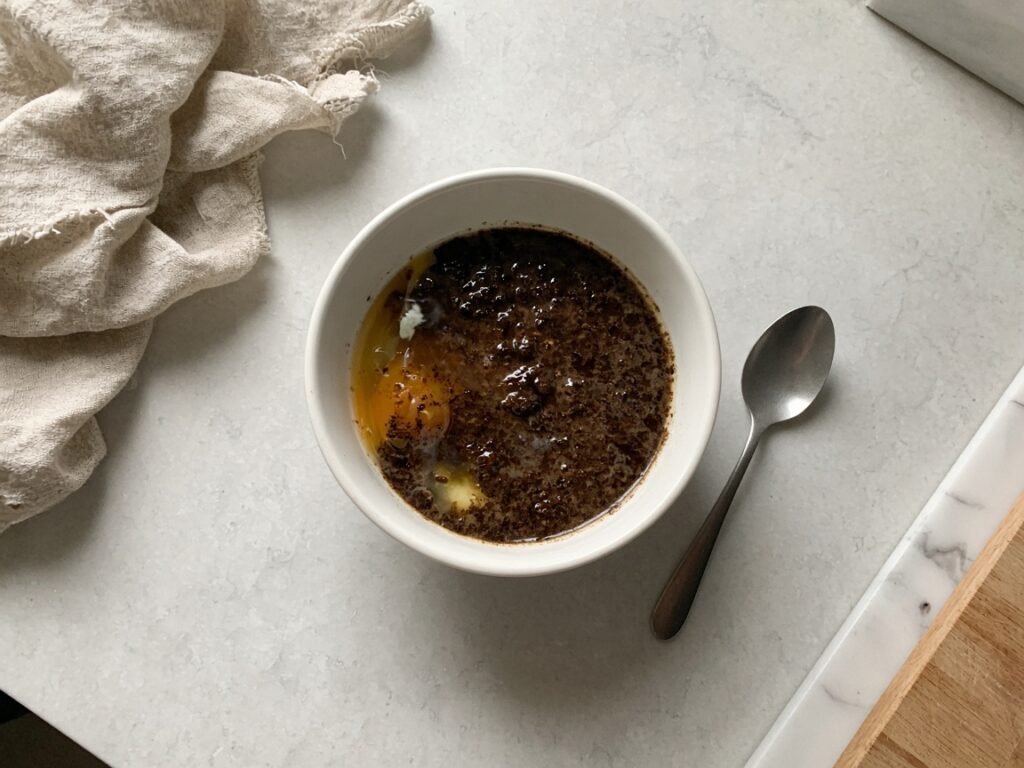
Start by combining the grounds, egg, and three tablespoons of water. Stir them into a loose paste. It will not look especially elegant, and that is fine. This is the preparation stage, not the photo for a breakfast menu.
Bring the three cups of water to a boil in the saucepan. Carefully add the mixture and watch it closely because it can foam. Use a pot with enough headroom, keep the handle turned away from the edge, and avoid leaning over the steam.
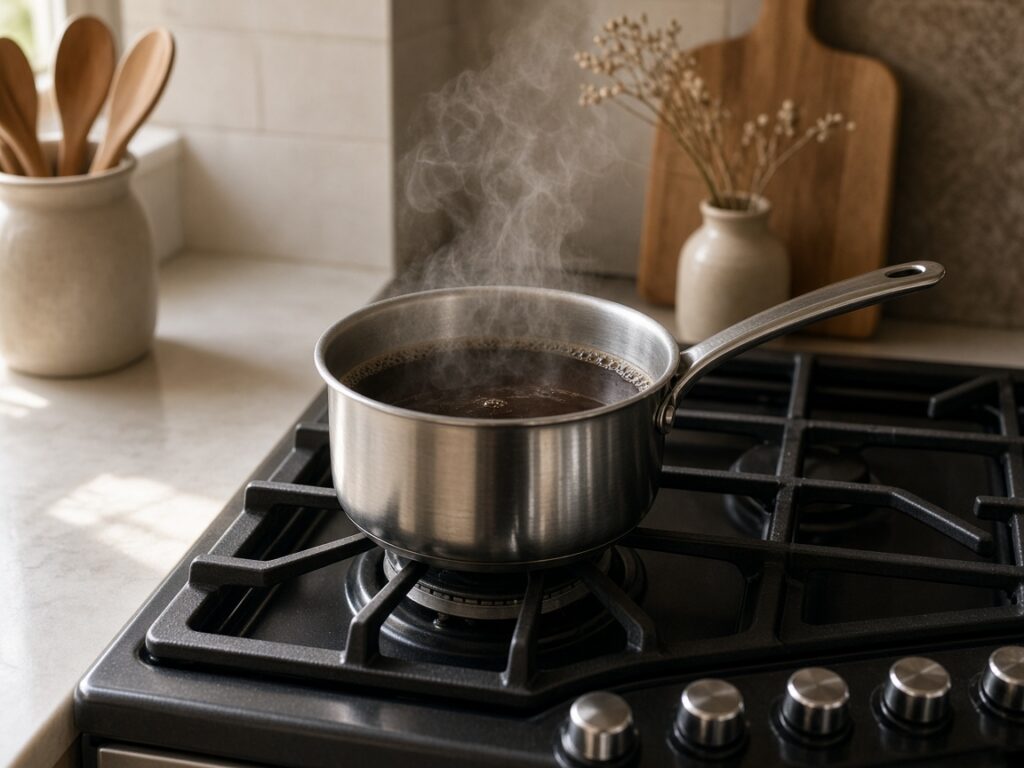
The source’s method boils the mixture for about three minutes. Treat that as its recipe timing, not a universal safety guarantee for every pot and stove. Make sure the egg-containing mixture is thoroughly heated before continuing.
A Quick Egg-Safety Check
The FDA’s egg-safety guidance warns that even clean, uncracked eggs can contain Salmonella. It recommends cooking egg dishes to 160°F and using a thermometer to check. Clean-looking shells are not a guarantee of safety.
For this experiment, check that the egg-and-grounds mixture reaches at least that temperature before removing it from the heat. Do not taste the raw paste. Wash your hands and clean the bowl, spoon, and counter after handling the uncooked egg.
If serving anyone with an egg allergy, do not offer this drink. Straining does not make an egg-containing recipe egg-free. Tell guests what is in it before they drink, even if revealing the unusual ingredient afterward sounds like a fun surprise.
Add Cold Water, Then Strain Carefully
Remove the saucepan from the heat. The source adds one cup of cold water at this point to cool the brew and help the mixture settle. Pour gently to avoid splashing hot liquid.
Let the solids settle enough to make pouring manageable, then strain the coffee into your heatproof jug. Use a fine strainer, with a paper coffee filter if you want an additional barrier against little bits. Keep the strainer supported securely.
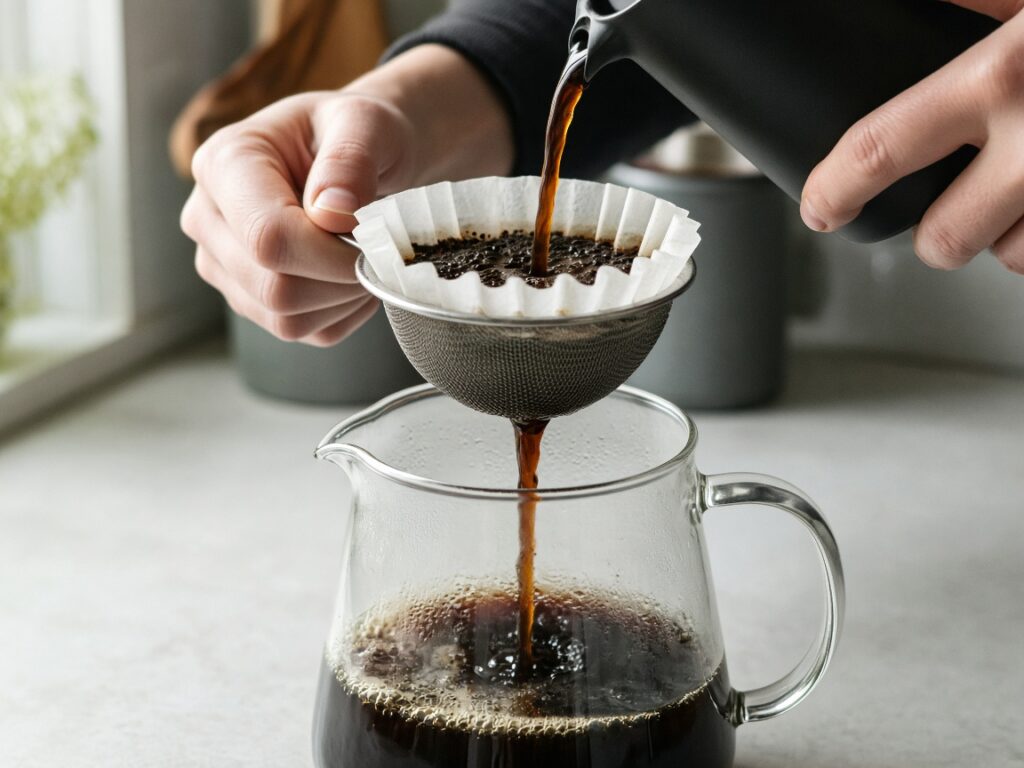
Do not squeeze hot clumps with your bare hands or rush the pour. Set the pan down between steps if needed. Once the solids are cool, discard them and wash the equipment as you would after other egg-containing recipes.
Taste It Without the Big Expectations
Keep a few notes if you try the method more than once. Record your coffee amount, water amount, and what you thought of the finished cup. Change just one thing at a time rather than changing the roast, the measurements, and the cooking method together. That way, your next attempt is a useful comparison instead of a completely different experiment. And if you are making coffee for a group, practice with a small batch first so you are not learning the process while everyone waits for breakfast.
Now comes the enjoyable part. Pour a small cup and try it plain first if that suits you. Notice the body, bitterness, and whether there are any gritty particles. You are deciding what you like, not trying to pass a nostalgia test.
The added cold water changes the strength and serving temperature, too. If you usually drink a concentrated brew, this version may seem gentler partly because the ratio and method differ. There is no need to credit every change to one ingredient.
If it is not your favorite, your regular coffee maker has not gone anywhere. Old methods can be interesting without becoming permanent habits. The best experiment is one that answers your own question about the cup.

A Small Ritual With a Surprising Twist
The charm of Scandinavian egg coffee is the pause it creates. You mix, watch, strain, and notice what happens instead of pressing a button. It turns a familiar drink into a small kitchen discovery.
Keep the shell out, handle the egg safely, and do not promise anyone a miracle brew. A warm cup and an interesting story are already plenty to bring to the breakfast table.
Thanks for sharing this curious coffee break with us! This post is for entertainment and general information, not professional food-safety or health advice. May your next cup come with good company and a little kitchen curiosity.