Houses
The Historic Leroy King Estate in Tuxedo Park
Riven Oaks: A Remarkable Gilded Age Estate in Tuxedo Park, New York

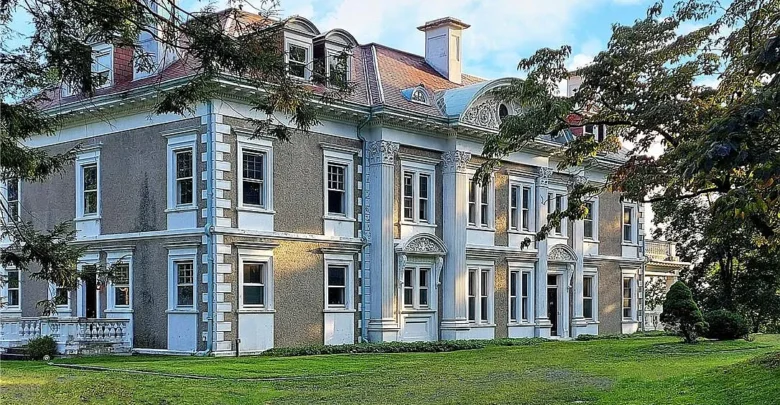
Historic estates have a unique ability to tell the story of another era through architecture, craftsmanship, and landscape. Riven Oaks, located within the prestigious gated community of Tuxedo Park, New York, is an impressive example of that enduring appeal. Designed around the turn of the twentieth century, this Classical Revival residence reflects the scale, elegance, and architectural ambition associated with America’s Gilded Age.
Set amid the natural beauty of New York’s Hudson Valley region, the property combines historic architecture with privacy, elevated views, mature landscaping, and access to the recreational amenities associated with Tuxedo Park. For a future owner interested in preservation and restoration, Riven Oaks represents an opportunity to reimagine a substantial historic residence while respecting the details that give the property its distinctive character.
A Historic Estate With Classical Revival Architecture
One of the most striking aspects of Riven Oaks is its exterior architecture. The residence was designed on a monumental scale, creating a commanding presence that immediately distinguishes it from a conventional country home.
Its Classical Revival design incorporates architectural elements associated with grand American residences of the late nineteenth and early twentieth centuries. Among the most recognizable exterior features are the dramatic Corinthian columns and an elaborately detailed curved pediment.
These elements give the façade a sense of symmetry, formality, and permanence. Rather than relying on contemporary design trends, the house draws inspiration from classical architectural traditions that have influenced important civic buildings, estates, and institutions for centuries.
The overall proportions of the residence further reinforce its historic character. Large-scale architectural details were intended not only to make a visual statement but also to establish a sense of arrival appropriate for an important country estate.
Today, those surviving elements contribute significantly to the property’s restoration potential.
Interior Spaces Rich in Historic Character
The historic atmosphere continues inside Riven Oaks, where numerous architectural details remain part of the residence.
Soaring ceilings contribute to the impressive scale of the principal rooms, while extensive woodwork, decorative wall paneling, original flooring, and multiple fireplaces help preserve the home’s traditional appearance.
These details are particularly valuable in historic properties because they provide a direct connection to the craftsmanship and design preferences of the period in which the residence was created.
Original architectural features can also provide an important foundation for a thoughtful renovation. Instead of attempting to recreate historic character from scratch, a restoration project can work with existing materials and design elements while introducing carefully selected modern improvements.
The home’s spacious rooms and large gathering areas could potentially accommodate a variety of future uses depending on the owner’s plans and any applicable preservation, building, or community requirements.
Formal entertaining rooms could remain elegant gathering spaces, while other areas might be adapted for libraries, offices, sitting rooms, guest accommodations, or more contemporary living arrangements.
The result could be a residence that retains the visual impact of its historic origins while functioning comfortably for modern life.
Multiple Levels and an Existing Elevator
Large historic estates often present practical challenges because of their size and multi-level layouts. Riven Oaks already includes an elevator providing access throughout its expansive interior.
That feature may offer added convenience when moving between floors and could become especially useful as part of a comprehensive renovation.
Any restoration involving an older elevator, electrical system, plumbing, heating equipment, structural components, or other building systems should naturally include professional inspections and evaluations. Historic houses can contain systems installed or modified during several different periods, making careful planning an important part of responsible ownership.
For a property of this scale, developing a detailed restoration strategy before beginning major construction could help preserve significant architectural elements while determining which components should be repaired, upgraded, or replaced.
A Rare Restoration Opportunity
Riven Oaks is especially interesting because it offers more than historic architecture. It presents the possibility of restoring and adapting an important residence for a new generation.
Restoring a substantial historic property can be a significant undertaking. However, for buyers who appreciate historic preservation, architecture, and custom design, such projects can provide opportunities that newly constructed homes cannot easily reproduce.
Original woodwork, large fireplaces, substantial room proportions, historic masonry, traditional flooring, and decorative details all contribute to an atmosphere that would be difficult to duplicate in a modern development.
A thoughtful renovation could focus on preserving those defining elements while incorporating contemporary kitchens, updated bathrooms, improved climate systems, modern electrical infrastructure, enhanced insulation, communications technology, and other conveniences.
The most successful historic renovations often balance preservation and functionality rather than allowing one to completely replace the other.
Before undertaking substantial alterations, prospective owners should investigate any applicable local regulations, architectural review procedures, community rules, historic preservation requirements, and permit obligations.
Elevated Grounds and Hudson Valley Scenery
Architecture is only part of the experience at Riven Oaks. The surrounding landscape plays an equally important role in defining the estate.
Positioned on elevated grounds, the property benefits from views toward the surrounding mountains and nearby lake scenery. Mature trees and established landscaping contribute privacy and create a setting that feels distinctly different from densely developed suburban neighborhoods.
Historic terraces and stone garden features add another layer of character to the grounds. These elements can help connect the architecture of the residence with the surrounding landscape while providing potential locations for outdoor seating, gardens, entertaining areas, or quiet spaces for enjoying the scenery.
For a future restoration project, the landscape itself could become an important component of the property’s renewal.
Existing mature trees and historic hardscape features may provide a strong starting point for a landscape plan designed to complement the architecture. Restored gardens, pathways, terraces, and outdoor gathering spaces could reinforce the estate’s original sense of scale while making the grounds more functional for contemporary use.
Life Within Tuxedo Park
The location within Tuxedo Park adds another dimension to the property.
Tuxedo Park is known for its historic character, natural surroundings, private lakes, and gated environment. Its combination of architecture and landscape has long made the community distinctive within the greater New York region.
Residents can enjoy access to outdoor activities associated with the community and its natural setting, including boating, swimming, fishing, and scenic trails, subject to applicable community rules and access privileges.
For someone considering a historic country residence, this setting can offer an appealing balance. The environment provides privacy and recreational opportunities while remaining within reach of New York City and other destinations throughout the Hudson Valley.
The community’s gated setting and twenty-four-hour security are additional features that may appeal to buyers seeking greater privacy.
Prospective purchasers should verify current community amenities, membership arrangements, fees, restrictions, and access policies directly with the appropriate community or listing representatives because such details may change over time.
Natural Beauty in Every Season
One of the advantages of a Hudson Valley location is the dramatic seasonal variation.
During spring and summer, mature trees and landscaped grounds create a lush environment around historic residences such as Riven Oaks. Autumn brings the changing foliage for which the broader region is well known, while winter can reveal architectural and landscape details that are partially concealed by vegetation during warmer months.
For a property designed to interact visually with its surroundings, these seasonal changes can make the estate feel different throughout the year.
Large windows, terraces, gardens, elevated grounds, and lake and mountain views all contribute to the relationship between the residence and its landscape.
That connection between architecture and nature is an important part of what distinguishes a traditional country estate from an ordinary large home.
Privacy Within Reach of Manhattan
Despite its peaceful setting, Tuxedo Park is located within reach of the New York metropolitan area. The community is approximately an hour from Midtown Manhattan, although actual travel times can vary considerably depending on traffic, route, weather, and transportation method.
This location may appeal to buyers who want the atmosphere of a historic Hudson Valley estate without being completely disconnected from New York City.
Access to the broader metropolitan region also means that cultural attractions, dining, shopping, professional services, airports, and other amenities can remain accessible while the property itself retains a much more secluded character.
That combination of privacy and regional accessibility has historically been one of the defining attractions of country estates near New York City.
What to Consider Before Restoring a Historic Estate
Purchasing a historic residence is different from purchasing a recently constructed home. The architecture may be extraordinary, but the age and complexity of the property make thorough due diligence particularly important.
Prospective buyers should consider obtaining qualified inspections of the structure, roof, foundation, masonry, drainage, electrical systems, plumbing, heating and cooling equipment, fireplaces, elevator, windows, and other major components.
It may also be useful to consult professionals with experience in historic architecture and preservation. Contractors who regularly work with newer construction may not always use methods appropriate for older materials or traditional craftsmanship.
A detailed assessment can help a future owner distinguish between architectural features that should be carefully preserved and systems that may require modernization.
Renovation costs, maintenance requirements, property taxes, insurance, community fees, and potential preservation restrictions should also be evaluated before making a purchase decision.
These considerations are particularly important for an estate of substantial size.
The Potential for a Remarkable Private Residence
What ultimately makes Riven Oaks compelling is its potential.
The residence already possesses many qualities that cannot simply be added during a conventional renovation: historic scale, Classical Revival architecture, mature grounds, original interior details, established terraces, mountain scenery, and a location within one of New York’s notable historic residential communities.
A carefully planned restoration could preserve those qualities while creating interiors suited to contemporary expectations.
Rather than transforming the estate into something unrecognizable, a future owner could use the surviving architecture as the foundation for a new chapter in the property’s history.
The large rooms could once again become elegant gathering spaces. Historic fireplaces and woodwork could remain focal points. Gardens and terraces could be renewed, while modern mechanical systems and carefully integrated technology could make the residence more comfortable and practical.
A Distinctive Piece of New York Architectural History
Riven Oaks represents the type of property that attracts attention not simply because of its size, but because of its history, architecture, landscape, and possibilities for preservation.
Its Classical Revival façade, Corinthian columns, curved pediment, spacious interior, original details, fireplaces, elevator, elevated grounds, and established landscape combine to create an estate with a character rarely found in contemporary construction.
For the right buyer, restoring a property of this significance could be more than a conventional home renovation. It could become a long-term preservation project centered on protecting an important historic residence while adapting it for modern living.
With Tuxedo Park’s lakes and natural surroundings nearby and New York City within regional reach, Riven Oaks offers an unusual combination of history, privacy, recreation, and accessibility.
Anyone considering the property should independently verify the listing information, condition, dimensions, amenities, community privileges, renovation requirements, taxes, fees, and applicable restrictions with the listing agent and appropriate professionals before making a financial or real estate decision.
For those who value historic architecture and are prepared for the responsibilities that accompany restoration, Riven Oaks offers the opportunity to preserve a remarkable estate and give an important piece of Hudson Valley architectural heritage a new chapter.
See more under photos


Watch Zillow