You step toward the kitchen sink with a mug of hot coffee, glance out the window past the damp hydrangeas, and freeze. Out on the manicured turf, dwarfing your garden hose and making the neighbor’s parked sedan look strangely toy-like, stands an apex predator with talons thick as pine pegs. Seeing a large eagle in a suburban yard instantly scrambles your sense of scale. Your quiet slice of the neighborhood suddenly feels like a wild mountain ridge.
Before local rumor mills invent wild tales of escaped specimens or covert biology experiments, take a steady breath. Encounters like this are rare, yet they happen every single year as raptor populations rebound across North America. Understanding why that imposing bird selected your lawn helps replace shock with calm, sensible stewardship.
The Optical Illusion of Size: Why Suburban Eagles Look Impossibly Huge
Most of us only ever spot bald eagles as distant silhouettes circling three hundred feet above a river valley or perched high on a highway light pole. Up against the open sky, their true physical mass rarely registers. When that same creature drops onto a patch of trimmed Kentucky bluegrass right beside a regular mailbox, the visual contrast hits like an electric shock.
Bald eagles are genuinely massive birds. Mature females can boast wingspans approaching eight feet and weigh upwards of twelve to fourteen pounds—nearly twenty-five percent heavier than their male counterparts. That sexual dimorphism means a visiting female looks like a visitor from the ice age when viewed at eye level.
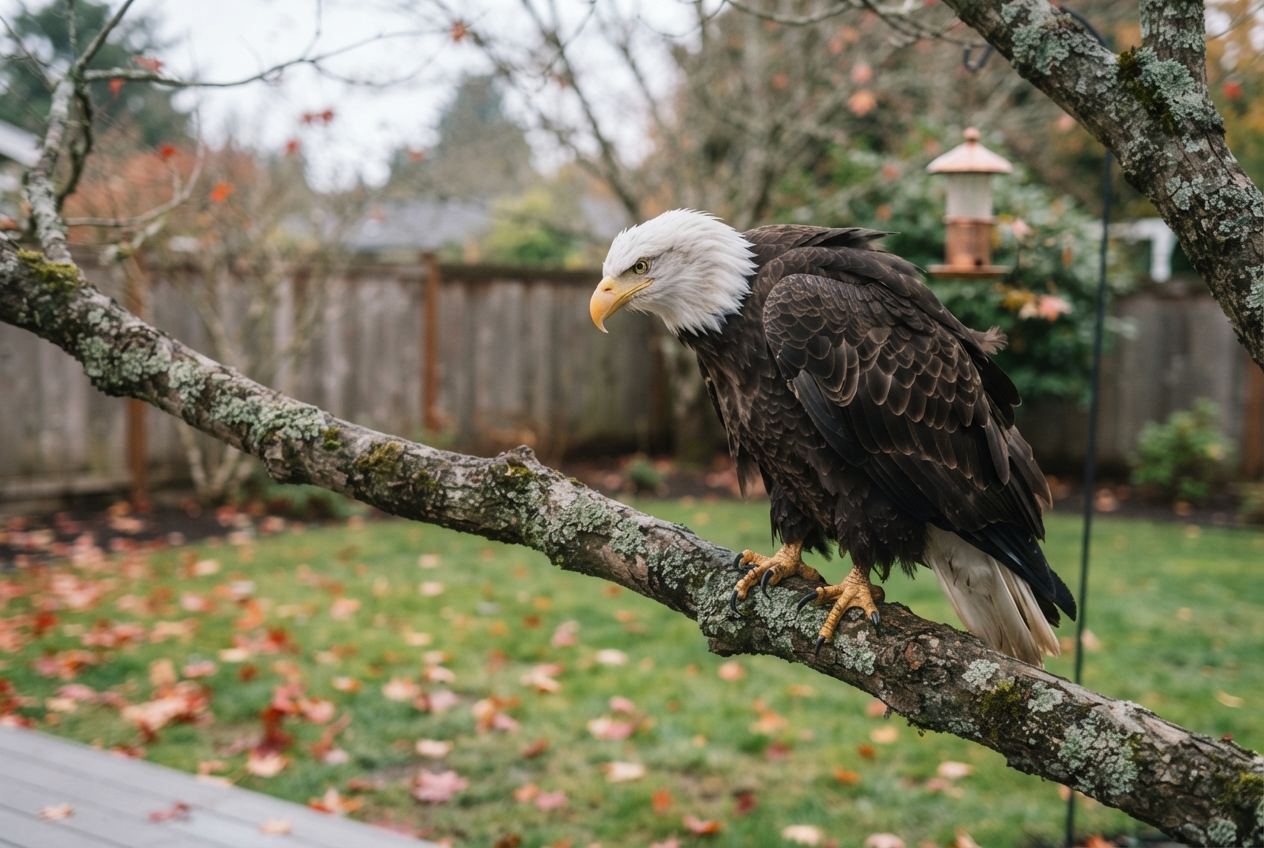
A female bald eagle resting on a low branch, showing off the heavy feathering that keeps northern raptors warm in autumn.
There is also seasonal physics at work. During crisp autumn mornings and bitter winter afternoons, raptors actively fluff their plumage. By trapping pockets of warm body heat within their dense down layers—a physiological trick known as piloerection—they practically double their visible silhouette. What looks like a ten-foot giant is often an ordinary, healthy adult female keeping her core warm while surveying the neighborhood.
Why a Large Eagle in a Suburban Yard Chooses Your Turf
Suburbs are rarely the barren concrete wastelands we imagine them to be. Modern residential developments often weave through old river corridors, reservoir systems, and protected greenways. As northern waterways freeze over in late fall, hunting grounds tighten, nudging hungry raptors inland to scout alternative food sources.
An open front lawn offers clear, unobstructed sightlines. Eagles rely heavily on sharp eyesight to scan for meals, and a clean stretch of grass eliminates the tangled brush that lets prey scurry out of view. If a neighbor recently trimmed a tall oak or left an open compost bin that attracted squirrels, an eagle treats that open yard as a temporary drive-thru perch.

Keeping field binoculars and a warm mug by the back window turns an unexpected wildlife visit into a calm morning study.
Opportunistic feeding also drives these visits. Bald eagles are remarkable hunters, but they are equally shameless scavengers. A rabbit struck along a quiet cul-de-sac or a fish dragged up from a community retention pond provides easy calories with minimal energy spent. To a bird burning thousands of calories just staying warm, your grass is simply a safe dining table.
Protecting Pets and Respecting the Talon: Practical Backyard Etiquette
The moment you spot an apex predator on the property, immediate household priorities shift. While an eagle prefers fish and small mammals like mice, groundhogs, or squirrels, you must never take chances with domestic companions. Bring indoor-outdoor cats and small dogs inside the house immediately, keeping them well away from exterior doors until the visitor departs.
Curiosity tempts many people to run outside with a smartphone in hand to snap a close-up photo. Resist that urge entirely. Approaching a feeding or resting raptor stresses the animal, forcing it to burn precious survival reserves or abandon its food source before finishing.
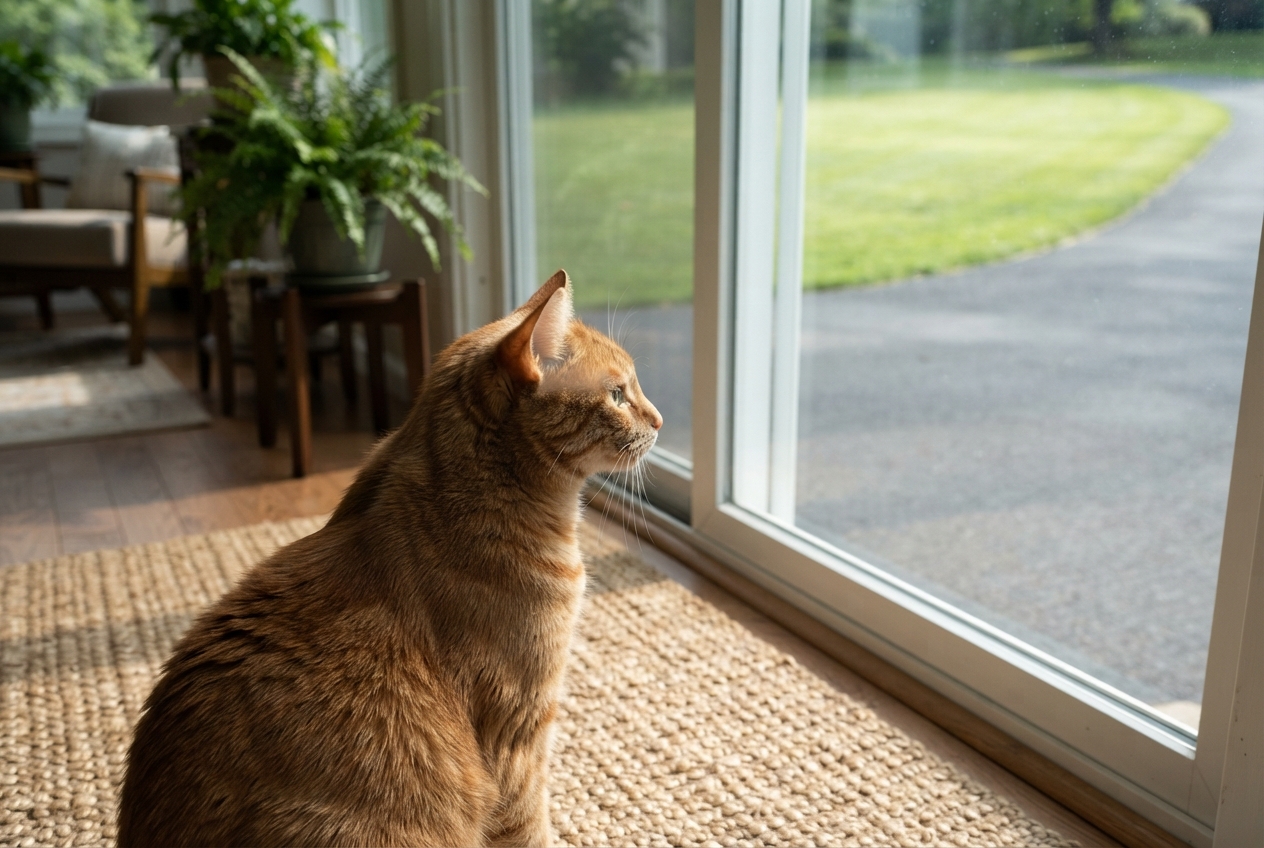
Keeping domestic pets indoors behind closed glass is the first and most responsible step whenever large birds of prey drop by.
- Maintain a 150-foot buffer: Stay indoors and observe through closed windows. If you must step outside, remain on your porch without walking toward the bird.
- Lower interior window shades: A startled raptor taking off fast can become confused by exterior glass reflections, leading to dangerous window strikes.
- Keep pets leashed for subsequent outings: Even after the bird takes flight, linger on leash duty for the rest of the day in case it lingers in nearby canopy trees.
- Hold back the neighborhood crowd: Discourage groups of onlookers from forming a ring on the sidewalk, which corners the bird and spikes panic.
Reporting, Documenting, and Observing Like a Naturalist
Rather than calling emergency services or stirring up neighborhood gossip online, treat the encounter as a rare natural history lesson. Grab a pair of binoculars and inspect the bird quietly from an upper window. Look closely for leg bands—metal or colored plastic rings that wildlife departments use to monitor bird ages and travel routes.
Take note of plumage details. Solid brown heads and mottled white bellies indicate an immature bird under five years old, while that iconic stark white cap and tail belong strictly to mature adults. These field markings tell a rich story about where the bird might be headed along its seasonal path.
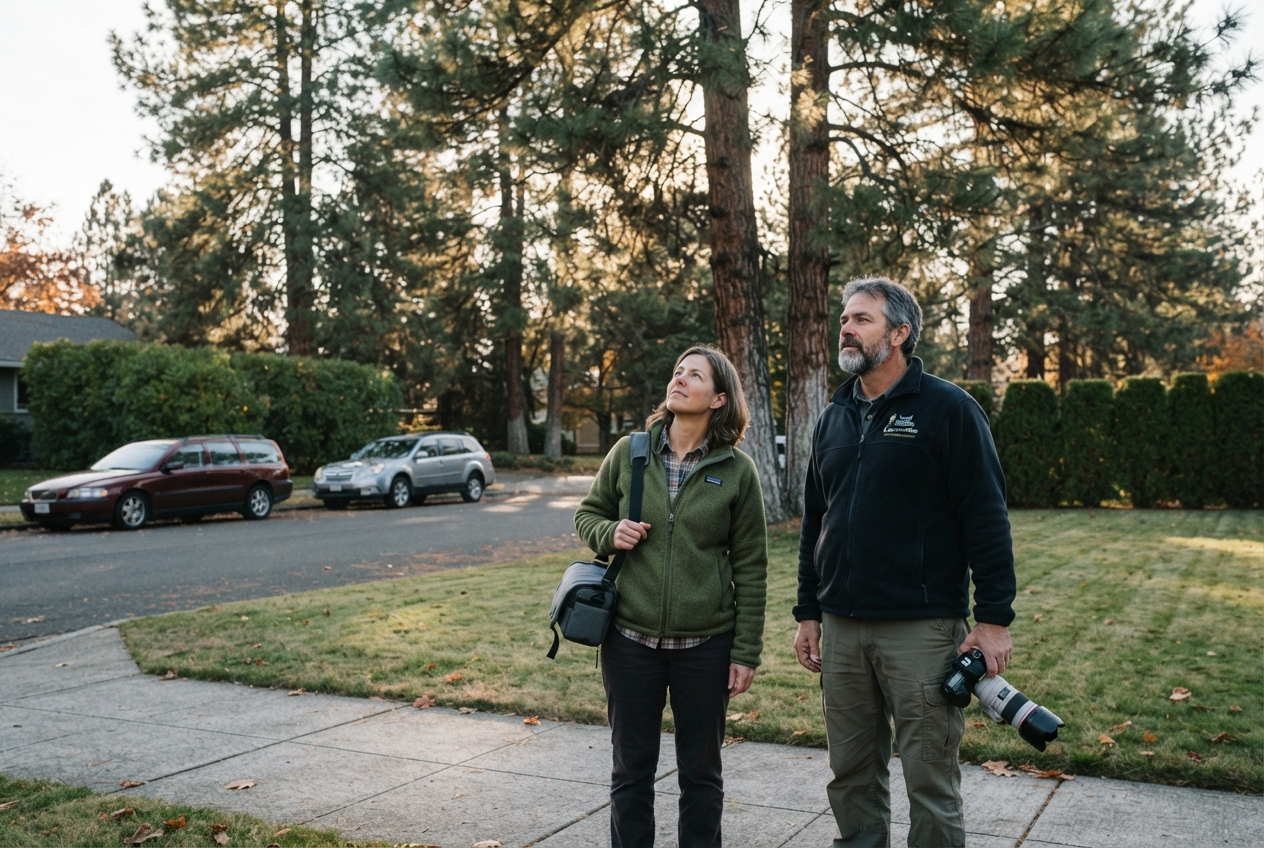
Watching from across the street gives neighborhood raptors the space they need to forage without unnecessary panic.
There are rare instances where human intervention is truly warranted. If the eagle remains grounded for hours with drooping wings, appears lethargic, or fails to fly when loud noises occur nearby, it may be sickened by lead poisoning from ingested ammunition or injured by power lines. In that situation, contact a licensed local wildlife rehabilitator or your state natural resources division. These licensed experts possess the gear, thick leather gauntlets, and transport boxes needed to help the bird safely.
Finding Wonder in the Wild Right Outside Your Window
It is easy to forget that suburban life does not stand isolated from nature. Having a large eagle in a suburban yard might feel disorienting at first, but it serves as a powerful reminder of how resilient native species can be when given half a chance. A few decades ago, seeing a bald eagle anywhere near populated towns was nearly unthinkable.
When the great bird finally finishes its meal, spreads those immense wings, and catches a cold thermal above your roofline, the quiet street settles back into routine. The cars drive past, the squirrels return to the gutters, and your grass returns to being just a patch of green. Yet for that brief hour, your home held a front-row seat to the raw beauty of the wild.