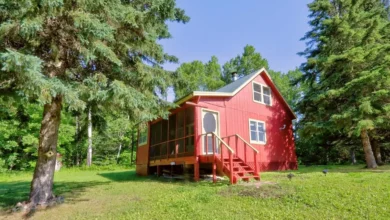
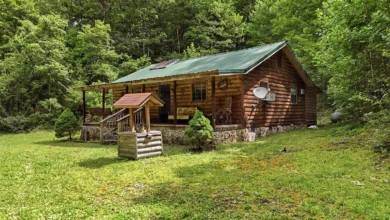
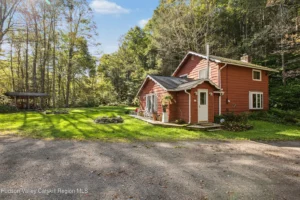
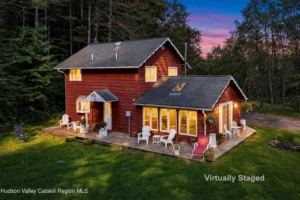
There is a particular kind of quiet you only find in the Catskills. It is not silence exactly. It is the sound of moving water, wind through hardwoods, and not much else. At 123 Maben Hollow Road in Big Indian, New York, that quiet comes with 51.55 acres of deeded land, a 1950 country cottage set beside the Esopus Creek, and a price of $595,000.
For anyone who has spent the last few years watching Hudson Valley and Catskills prices climb, that combination deserves a closer look. Fifty acres alone is rare here. Fifty acres with a livable house, a barn, a meadow, and direct creek frontage is rarer still.
A Cottage Built for the Sound of Water
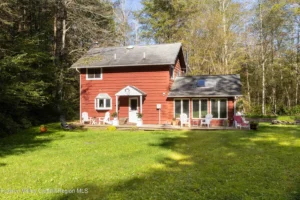
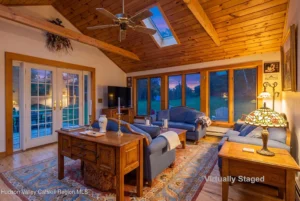
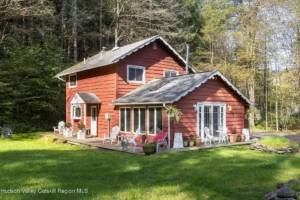
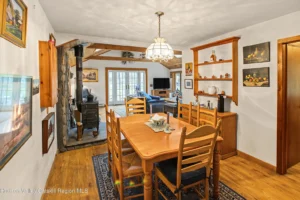
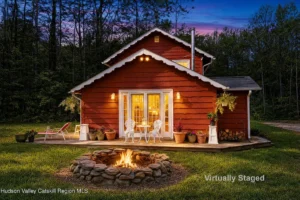
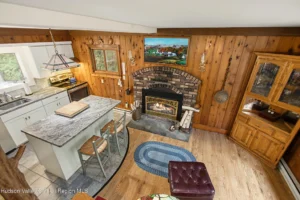
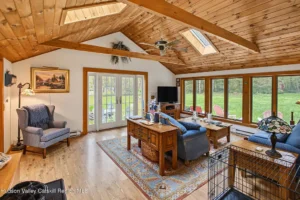
The house itself is modest by design and all the better for it. Built in 1950, it offers three bedrooms, two full bathrooms, and roughly 1,362 square feet of living space. This is a country cottage, not a showpiece, and its scale is part of the appeal. Smaller homes in settings like this tend to get used the way they were meant to be used, with most of life happening outdoors and the house serving as a warm place to return to.
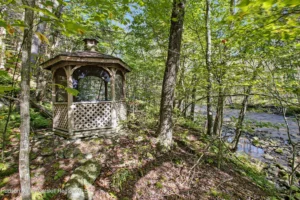
Its position is the real asset. The cottage sits creekside, which means the Esopus is not a distant feature you drive to visit. It is the background sound of every morning coffee, every open window in summer, every evening on the porch. A gazebo overlooking the water extends that relationship further, giving you a dedicated spot to sit above the current and do nothing at all.
A large storage shed handles the practical side, and anyone who has owned rural property knows how quickly that kind of space fills up with mowers, tools, firewood, kayaks, and the accumulated equipment of country living.
The Esopus Creek and Why It Matters
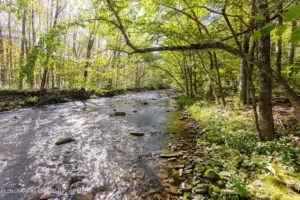
The Esopus is not just any waterway. It is one of the most recognized trout streams in the eastern United States, and fly fishermen travel considerable distances to fish it. Owning frontage on it places you inside a tradition that stretches back generations in these mountains.
Beyond the fishing, a creek changes the character of a property in ways that are difficult to quantify but immediately obvious when you stand there. Moving water cools the air on hot afternoons. It draws wildlife. It provides a constant, gentle sound that masks whatever little road noise exists. It gives children something to do for entire summers. And it anchors the land visually, giving the property a natural spine rather than just a boundary line on a survey.
Two Parcels, Fifty-One Acres, and Forest Tax Law Management
The acreage here spans two parcels and totals 51.55 deeded acres. That size delivers something increasingly hard to buy at any price: genuine privacy. Not the suggestion of privacy created by a hedge and a long driveway, but the actual kind, where your nearest neighbor is separated from you by acres of standing timber.
The woodland is managed under New York State Forest Tax Law, a detail worth understanding carefully. This program, often referred to as 480-a, offers property tax reductions to owners who commit to a state-approved forest management plan, typically involving periodic timber harvests and continued forest use over a long commitment period. The benefit is meaningful savings on a substantial parcel. The obligation is that the land must stay in the program under its terms, and withdrawing early can trigger penalties.
Any serious buyer should request the current management plan and speak with both an attorney and the assessing authority before closing. This is not a reason to avoid the property. It is simply a piece of the puzzle that deserves clear eyes rather than assumptions, and plenty of Catskills landowners operate happily within the program for decades.
The Barn, the Meadow, and the Fruit Trees
Along the right side trail sits a two-level barn of roughly 750 square feet, built in 2002. It replaced a former second home that once stood on the 5.9 acre parcel, which is an interesting historical note and a potentially significant one depending on local zoning and what previously existed there.
A barn of this size and vintage opens real possibilities. It could serve as a workshop, a studio, equipment storage, or the starting point for a conversion project. Two levels means usable square footage on both floors, and the 2002 construction date means the structure is young enough to be sound without the extensive restoration an antique barn would require.
Beside it lies a meadow dotted with old fruit trees, with a picnic table and benches already in place. Meadows are underrated on large parcels. Fully wooded land is beautiful but visually enclosed. A clearing gives you long sightlines, sun exposure for growing, space for gatherings, and a place where the property opens up and breathes. Old fruit trees suggest someone tended this ground carefully at some point, and with pruning and attention many neglected trees come back into production.
Direct Trail Access to State Land
Two deeded State easement trails run through the property, one on each side, leading through woodland paths to State land behind it. For outdoor-minded buyers, this may be the single most valuable feature after the creek.
Deeded access means it is written into the property rights, not granted at a neighbor’s discretion. You walk out your door, follow a path through your own woods, and arrive on public land. No driving to a trailhead. No parking lot. No competing for space on a busy weekend.
Catskill Park encompasses roughly 700,000 acres, and the Big Indian-Oliverea Valley sits in a particularly rewarding corner of it. Having private trail access into that system from your own property is a genuinely uncommon arrangement.
Skiing, Swimming, and Everything In Between
The location works year-round, which is more than most mountain properties can claim.
In winter, three ski areas sit within a 15 to 45 minute drive: Belleayre, Plattekill, and Hunter Mountain. Belleayre is the closest and is state-operated, which generally means reasonable pricing and reliable snowmaking. Hunter draws a bigger crowd and offers more terrain and nightlife. Plattekill has a devoted following among skiers who appreciate its independent character and uncrowded slopes. Having all three accessible from one base is unusual and makes the property compelling for a household where not everyone wants the same ski experience.
Warmer months bring Belleayre Lake Beach, an easy local option for swimming without the drive to a larger destination. Farmers markets operate throughout the region during the season, and the surrounding hamlets have developed a genuinely strong food scene over the past decade, with restaurants that draw visitors up from New York City specifically to eat.
And the hiking, of course, is the reason many people come to the Catskills at all. Some of the region’s most popular trailheads sit minutes away, which means spontaneous hikes rather than planned expeditions.
Who This Property Suits
This is not a house for everyone, and the listing does not pretend otherwise. A 1950 cottage of under 1,400 square feet will feel small to a buyer looking for a modern layout with open living space and multiple bathrooms per bedroom.
But for the right buyer, that is entirely beside the point. This property suits the person who has been priced out of the Hudson Valley market and wants real acreage rather than a large house on a small lot. It suits the weekend household from the city looking for a base that works in every season. It suits the hunter, the fisherman, the hiker, and the skier who wants to step out the door into the woods rather than load the car first. It suits anyone drawn to the idea of owning fifty acres of Catskills land with a creek running through it.
It also suits a long-term vision. At this price with this much land, there is room to improve the cottage over time, convert the barn, clear additional meadow, or simply let the forest do what forests do while you enjoy the privacy.
What to Verify Before Buying
Anyone moving forward should do the homework that rural property always demands. Confirm the exact terms and remaining commitment period of the Forest Tax Law enrollment. Review the deeded easement language for both trails. Have the septic system and water supply inspected thoroughly. Check floodplain designation given the creek frontage, which matters for both insurance and any future building plans. And ask specifically about what governs the 5.9 acre parcel where the second home once stood, because that history may or may not carry development rights forward.
None of these are red flags. They are simply the standard diligence that a fifty-acre Catskills property with a creek and a tax program deserves.
Final Thoughts
Fifty-one acres. A creek famous enough that people travel to fish it. A barn, a meadow, old fruit trees, a gazebo above the water, and deeded trails leading into state land. All of it in a valley with three ski mountains, a lake beach, and some of the best hiking in the Northeast within easy reach.
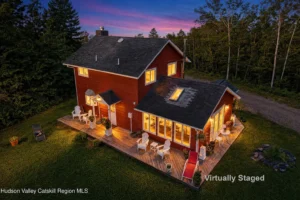

ZILLOW link
The cottage is modest, and the property will ask something of whoever buys it. But the land, the water, and the setting are the parts that cannot be created, improved, or bought later. Those are already here, and at $595,000 in the Catskills, that is a combination worth paying attention to.