5 beds 3 baths 1 acre
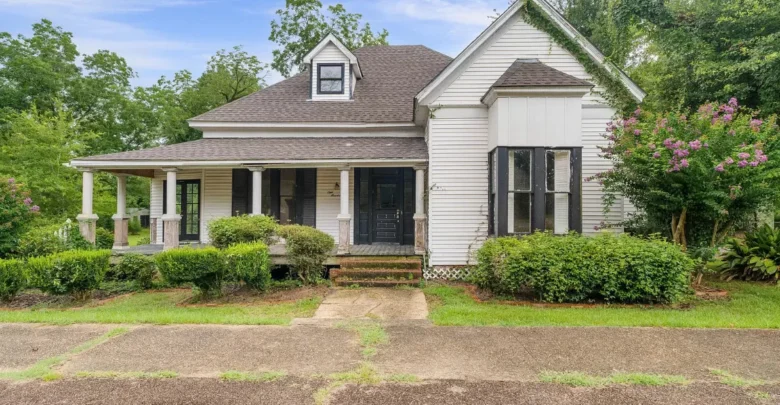
A circa 1920 historic home with crystal chandeliers, brick fireplaces and a covered front porch on a large corner lot in Mount Olive, Mississippi, listed at $52,900.
Some houses grab your attention with their size. Others do it with their price. This one does it with a ceiling.
Step inside this 1920 home in Mount Olive, Mississippi, and the first thing your eyes go to is overhead. Crystal chandeliers hang from tall ceilings, catching the light the way they were meant to more than a century ago.
Then you notice everything else. Hardwood floors. Crown moulding. Brick fireplaces. Built-ins. Wide baseboards that nobody bothers to install anymore.
This is a house that needs work. The listing doesn’t hide that, and neither will we. But it is also a five bedroom, three bathroom historic home on roughly one acre, priced at $52,900, with the sellers inviting offers.
Let’s walk through it room by room, and then talk honestly about what it would take to bring it back.
Property Overview
- Year built: circa 1920
- Bedrooms: 5
- Bathrooms: 3
- Lot: approximately 1 acre, large corner lot
- Location: Mount Olive, Mississippi
- List price: $52,900 (sellers asking for offers)
- Condition: needs work
- Notable features: covered front porch, hardwood floors, tall ceilings, crystal chandeliers, crown moulding, brick fireplaces, built-ins, wide baseboards
- Layout highlights: large living room, primary suite, classic formal dining room
First Impressions From the Street
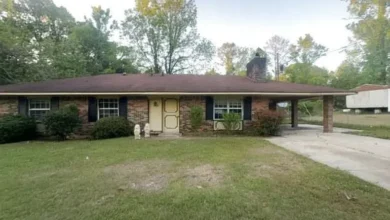
From the road, this house is easy to underestimate. It reads as a modest Southern home with a porch out front.
That is part of the charm of homes from this era. Many were built deep rather than wide, with rooms stretching back from the street and additions tucked behind the original structure over the decades.
The result here is a house that is much bigger than it looks. Five bedrooms and three bathrooms is a lot of living space hiding behind a humble facade.
The Covered Front Porch
Every old Southern house deserves a porch, and this one has it.
A covered front porch was never just decoration in Mississippi. Before air conditioning, it was where families spent summer evenings, greeted neighbors and caught whatever breeze the day offered.
Today it is still one of the most valuable features a historic home can have. Add a couple of rocking chairs, a ceiling fan and some ferns, and this porch could become the favorite room of the house.
Buyers should look closely at the porch floor, posts and ceiling. Porches take the brunt of the weather, and rot often starts at the bottom of the columns and along the edges of the decking.
The Crystal Chandeliers
These are the reason this house stops people mid-scroll.
Crystal chandeliers in a home at this price point are rare. Whether they are original to the house or added in a later era, they give the main rooms an elegance that would cost thousands to recreate.
A new buyer should plan to have them inspected by an electrician. Old fixtures can hide brittle wiring and worn sockets. Rewiring a chandelier is usually an affordable job, and it protects both the fixture and the house.
Cleaning crystal is tedious but satisfying work. Once each prism is washed and rehung, the difference in sparkle is dramatic.
The Large Living Room
The listing describes the living room as large, and in a house of this age that usually means generous proportions and real presence.
Tall ceilings make a room feel bigger than its square footage. They also helped older homes stay cooler in the Southern heat, since warm air rises up and away from the people below.
With a brick fireplace, crown moulding and hardwood underfoot, this is the kind of room that only needs good furniture and good lighting to feel finished.
The Formal Dining Room
Formal dining rooms fell out of fashion for a while. They are coming back.
People want a dedicated space for holidays, family dinners and long conversations that don’t happen at a kitchen island. A classic formal dining room in a 1920 home is exactly that kind of space.
Picture a long table under one of those chandeliers, built-ins along the wall holding the good china. That is the image this room was designed for, and it still works.
The Bedrooms
Five bedrooms give this house an unusual amount of flexibility.
A large family could use every one as a sleeping room. A smaller household could turn one into a home office, another into a library, and still have guest rooms to spare.
The listing mentions a primary suite, which is a welcome detail in a house this old. Many homes from the 1920s were built before attached bathrooms were common, so a suite usually means someone already invested in updating the layout.
Bedroom closets in historic homes tend to be small. Freestanding wardrobes and the existing built-ins can make up the difference.
The Bathrooms
Three bathrooms in a 1920 home is a strong number. Many houses of this vintage started with one bathroom, or none at all, and added more over time.
That also means the bathrooms were likely updated at different times by different owners. Expect a mix of eras in tile, fixtures and plumbing.
Since the home needs work, buyers should budget for at least partial bathroom updates. The most important items are not cosmetic. Check for soft floors around toilets and tubs, slow drains, and any signs of leaks into the rooms below or the crawlspace.
The Kitchen
The listing doesn’t go into detail on the kitchen, which in a fixer-upper usually tells you something.
Plan on the kitchen being a renovation priority. The good news is that kitchens in old houses can be updated without losing their character. Shaker cabinets, a farmhouse sink, simple countertops and period-style lighting fit naturally into a home like this.
Many restorers choose to keep any original cabinetry or pantry built-ins and work around them. That blend of old and new is often what makes a historic kitchen feel special.
Hardwood Floors
Old-growth hardwood floors are one of the hidden treasures of older homes.
The lumber used a century ago was often denser and tighter-grained than what is commonly available today. Even floors that look tired can usually be sanded and refinished to a beautiful finish.
Before refinishing, check for areas where boards have been patched, where carpet glue or linoleum may still be stuck, and any spots with water damage. Most of these problems can be repaired by a good flooring contractor.
Crown Moulding, Baseboards and Built-Ins
These are the details that make a house feel handcrafted.
Wide baseboards and crown moulding were standard in quality homes of the era. Today, adding them to a new build can cost a surprising amount, and they rarely look as substantial.
The built-ins deserve special attention. Whether they are china cabinets, bookcases or linen storage, original built-ins add both function and value. Resist the urge to paint over old wood without stripping and repairing it properly first.
Brick Fireplaces
The house features brick fireplaces, plural. That is a real draw on a cool Mississippi evening.
Before lighting a fire, though, every chimney needs a professional inspection. Old chimneys often have deteriorated mortar, cracked flue liners or no liner at all. A chimney sweep certified by a recognized industry organization can tell you whether each fireplace is safe to use, needs relining, or should stay decorative.
Even as decorative features, brick fireplaces anchor a room and give it a natural focal point.
The Lot
The home sits on a large corner lot of roughly one acre.
An acre in a small town is a lot of room. It means space for a big garden, fruit trees, a workshop, a detached garage, a play area or simply a buffer between you and the neighbors.
Corner lots also bring extra light and better curb appeal, since the house can be seen from two directions. The trade-off is a bit more traffic and more yard to maintain along the street sides.
Check with the town about zoning and any restrictions before planning outbuildings or additional structures.
Roof
The listing doesn’t specify the roof’s age or material, so this is one of the first questions to ask.
On any home that needs work, the roof decides how fast everything else can happen. A sound roof protects the interior while you renovate. A failing roof means water damage that keeps spreading.
Look for missing shingles, sagging lines, stains on upstairs ceilings and soft spots in the attic decking.
Foundation
Many homes of this era in Mississippi sit on raised pier foundations rather than concrete slabs. Raised foundations allow air to move underneath and make plumbing and wiring repairs easier to reach.
They also need inspection. Common issues include settled piers, termite damage to sills and floor joists, and moisture in the crawlspace. Slightly sloping floors are normal in a hundred-year-old house. Dramatic slopes or bouncy floors are worth investigating with a structural engineer.
HVAC, Electrical and Plumbing
These are the systems that turn a beautiful old house into a comfortable one.
Ask what kind of heating and cooling the home currently has, and how old the equipment is. Mississippi summers are long, and central air is not optional for most buyers.
For electrical, have an electrician confirm there is no knob-and-tube wiring still in use, that the panel is adequate, and that there are enough grounded outlets for modern living.
For plumbing, ask about the supply and drain lines. Older galvanized or cast iron pipes may be near the end of their service life.
Renovation Priorities
If you were taking this house on, a sensible order of work might look like this:
- Roof repair or replacement, if needed
- Foundation and crawlspace repairs, including any termite damage
- Electrical updates, including chandelier rewiring
- Plumbing updates in the bathrooms and kitchen
- HVAC repair or replacement
- Chimney inspections and repairs
- Kitchen renovation
- Bathroom refreshes
- Hardwood floor refinishing
- Interior paint, trim repair and built-in restoration
- Porch repairs and exterior paint
- Landscaping on the one acre lot
The structural and system work comes first because it protects every cosmetic dollar you spend afterward.
Financing a Historic Fixer-Upper
At this price, some buyers may be able to purchase with cash. For everyone else, the condition of the house will shape which loans are realistic.
Conventional loans typically require the home to be in livable, safe condition. If major systems are not working, an appraiser may flag them.
FHA loans have minimum property standards that a home needing significant work may not meet.
The FHA 203(k) program is designed for exactly this situation. It lets buyers roll the purchase price and renovation costs into a single mortgage, with work completed after closing.
USDA loans are worth exploring in small Mississippi towns, since many rural communities qualify. Like FHA, USDA has property condition requirements, and there is also a USDA option that can include repair funds.
VA loans can be a strong option for eligible veterans, though the home must meet VA minimum property requirements.
Speak with a lender who has experience with renovation loans before making an offer. They can tell you which programs fit this specific property.
Insurance Considerations
Insuring an older home that needs work can take extra effort.
Some insurers hesitate to cover homes with older roofs, outdated wiring or vacant status during renovation. Get insurance quotes before you close, not after.
Ask agents about builder’s risk or vacant home policies if you will be renovating before moving in. And ask whether any updates, like a new roof or electrical panel, would lower your premium.
Owner-Occupant Potential
For the right person, this could be a remarkable home.
Five bedrooms, three bathrooms, formal rooms and an acre of land at this price is almost unheard of in most of the country. A buyer willing to live in the house while renovating in stages could build significant equity over time.
Small-town life also has its own appeal. Quiet streets, neighbors who know your name and a slower pace are exactly what many people are looking for.
Rental and Investment Potential
Investors will see a different opportunity.
A large home with five bedrooms could appeal to families looking to rent in the area. Depending on local rules, a carefully restored historic home could also work as a short-term rental for visitors who want an authentic Southern experience.
Run the numbers carefully. Renovation costs can climb quickly in old houses, and rents in small Mississippi towns are modest. The best investment outcome often comes from buying right and controlling the rehab budget tightly.
About Mount Olive, Mississippi
Mount Olive is a small town in Covington County in south central Mississippi.
It sits along the US 49 corridor between Jackson to the north and Hattiesburg to the south, which gives residents access to bigger-city shopping, hospitals and jobs while still living in a quiet community.
Towns like this are part of what makes Mississippi real estate so appealing to buyers from more expensive states. Historic homes, large lots and low prices are still possible here.
The Price in Context
At $52,900, this house is priced like a project, because it is one.
The listing invites offers, but looking at nearby homes, this price isn’t too far off the local market. Smaller and newer homes in the area often list for similar or higher amounts, without the history, the size or the chandeliers.
The real number to focus on is the total cost: purchase price plus renovation. A careful estimate from contractors before you buy is the only way to know whether the math works for you.
Due Diligence Questions to Ask
- How old is the roof, and has it ever leaked?
- What type of foundation does the home have, and has it had any repairs?
- Is there a current termite inspection or bond?
- What kind of wiring does the house have, and when was the panel last updated?
- What are the supply and drain pipes made of?
- How old are the heating and cooling systems?
- Are the chandeliers included in the sale?
- Are any of the fireplaces currently usable?
- Is the home in a flood zone?
- What are the annual property taxes?
- Are there any liens, easements or survey issues on the lot?
- Is the home within town limits, and which utilities serve it?
Inspection Is Essential
No matter how good the price looks, do not skip the inspection.
A general home inspection is the starting point. For a house of this age and condition, add a termite inspection, a sewer line scope if possible, a chimney inspection and a structural evaluation if the floors show unusual movement.
Inspection reports also give you leverage. If major problems turn up, they can support a lower offer or seller credits.
Final Thoughts
This 1920 home in Mount Olive is not for everyone. It needs time, money and patience.
But it offers things that are disappearing fast. Crystal chandeliers under tall ceilings. Real hardwood. Brick fireplaces. Built-ins made by hand. Five bedrooms on a corner acre in a quiet Southern town.
For a buyer who sees past the work and loves what old houses can become, those chandeliers might just be the beginning of something beautiful.
See the Listing


Our website is designed for informational and entertainment purposes only. We are not a real estate brokerage or licensed contracting service. We operate solely as an independent blog, curating interesting houses, DIY guides, and practical home tips found across the internet. All decisions related to real estate transactions or home renovations should be made in consultation with licensed professionals. We do not guarantee the ongoing accuracy or availability of external property listings, as market statuses change rapidly. Please use our content at your own discretion.