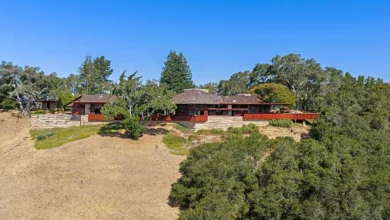
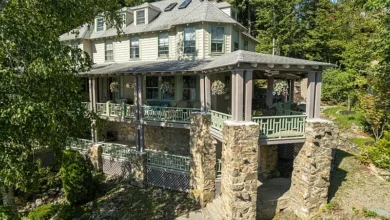
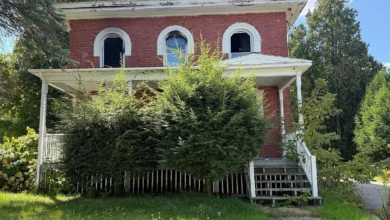
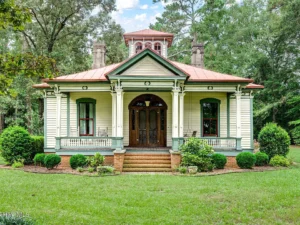
An 1848 former stagecoach and train station relocated to 7.82 wooded acres in Clinton, North Carolina, listed at $475,000.
Most old houses have a story. This one has several.
It was built in 1848 as a stagecoach station. Later, it served as a train station in the town of Warsaw, North Carolina. Then, at some point in its long life, it was carefully moved to a new home on 7.82 wooded acres in Clinton.
Today, it stands as a three-bedroom, two-bath residence that keeps its original character while offering the comforts modern buyers expect.
Homes like this rarely come to market. Let’s look at what makes it so special.
Property Overview
- Address: 393 Moltonville Road, Clinton, NC 28328
- Price: $475,000
- Bedrooms: 3
- Bathrooms: 2 full
- Living area: 2,152 square feet
- Year built: 1848
- Lot size: 7.82 wooded acres
- Original use: Stagecoach station, later a train station in Warsaw, NC
- Relocated: Moved to its current Clinton property
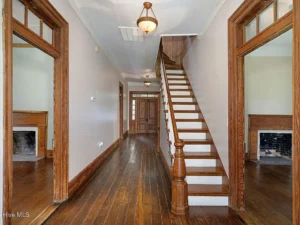
- Historic features: Original wood floors, solid wood doors, hand-crafted masonry, vintage windows
- Fireplaces: One in each of the three bedrooms
- Kitchen: Updated with new cabinetry, countertops, and appliances
- Primary suite: Private bathroom
A House That Has Traveled Through Time
In 1848, travel in rural North Carolina looked very different.
Stagecoaches carried passengers, mail, and news between towns. Stations along the routes gave travelers a place to rest, eat, and wait while horses were changed.
As railroads spread across the South, many communities shifted from stagecoach travel to rail. This building made that same transition, going on to serve as a train station in Warsaw.
That means the walls of this home have seen two eras of American transportation, along with generations of people passing through.
The Relocation
At some point, the building was carefully relocated to its current wooded site in Clinton.
Moving a historic structure is a major undertaking. It takes planning, skill, and a real commitment to preservation.
The fact that someone went to that effort says a lot about how much this building was valued. Instead of being lost, it was given a second life in a peaceful setting.
Buyers should ask when the move took place and request any documentation, since details about the new foundation and reassembly are important for understanding the home’s condition today.
Original Wood Floors
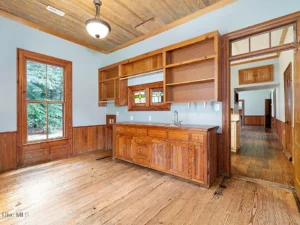
The home showcases preserved original wood floors.
Floors from the mid-1800s were often cut from old-growth lumber, which is denser and more durable than much of the wood available today.
Every scratch, worn path, and patina in these boards is part of the home’s history. With proper care, they can last for generations more.
Solid Wood Doors
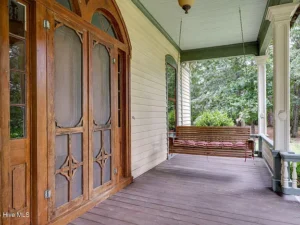
Solid wood doors are another original feature that has been preserved.
Doors like these have a weight and presence that modern hollow-core doors simply cannot match. They also help with sound control between rooms.
Original hardware, if still present, adds even more authenticity and charm.
Hand-Crafted Masonry
The listing highlights hand-crafted masonry, a mark of real craftsmanship.
Before machine-made materials became widespread, masons shaped and laid brick and stone by hand. The slight irregularities in that work give it a warmth and texture that cannot be faked.
Masonry in an older home should be inspected for mortar condition. Historic masonry often needs a softer, lime-based mortar during repairs, so it is worth working with a mason familiar with older buildings.
Vintage Windows
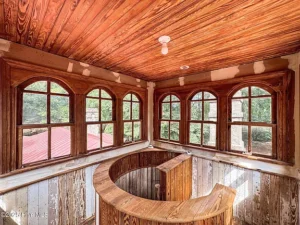
The vintage windows help tell the home’s story.
Old windows often contain wavy glass that softly distorts the view outside, a feature many historic home lovers treasure.
Original windows can be maintained and made more efficient with careful restoration, weatherstripping, and storm windows, without losing their character.
Three Bedrooms, Three Fireplaces
Each of the three bedrooms has its own fireplace.
That is a remarkable feature. In the 1800s, fireplaces were a primary source of heat, so having one in every bedroom was a practical necessity. Today, it is pure luxury.
Imagine a winter evening with a fire glowing in your bedroom, the kind of experience most homes simply cannot offer.
Buyers should have every chimney inspected by a certified chimney sweep to confirm which fireplaces are safe for wood burning, which might suit gas logs, and which are best kept decorative.
The Updated Kitchen
The kitchen has been thoughtfully updated with new cabinetry, countertops, and appliances.
This is the ideal balance for a historic home. The kitchen is the room where modern function matters most, and having it done means buyers can enjoy the home’s history without sacrificing everyday convenience.
It is also one of the most expensive rooms to renovate, so this update adds real value.
Two Full Bathrooms
The home includes two full bathrooms, one of which serves as a private suite bath for the main bedroom.
Original homes from the 1840s had no indoor bathrooms at all, so these spaces were added over time.
Having a primary suite with its own bath is a modern comfort that makes the home far more livable for today’s families.
Living Space
At 2,152 square feet, the home offers generous space without feeling overwhelming.
Historic buildings that once served the public often have larger rooms and taller ceilings than typical farmhouses of the same period, which can create a gracious, airy feeling inside.
Buyers should walk the layout to see how the former station spaces have been adapted into living rooms, dining areas, and bedrooms.
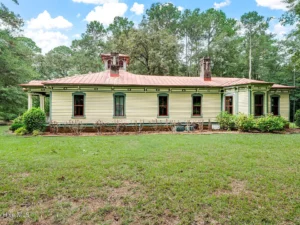
7.82 Wooded Acres
The home sits on 7.82 wooded acres.
That land offers privacy, natural beauty, and space to enjoy the outdoors. Trees provide shade in summer, color in fall, and a sense of seclusion year round.
There is room for walking trails, gardens, a workshop, or simply quiet space between you and the rest of the world.
Outdoor Living Ideas
With nearly eight acres, the possibilities are wide open:
- A wraparound porch or deck to enjoy the woods
- Walking or nature trails through the property
- A heritage garden with period-appropriate plants
- A fire pit area for evening gatherings
- A barn, carriage house, or workshop styled to match the home
- Bird feeders and wildlife viewing spots
- A small orchard or vegetable garden in a sunny clearing
Living in a Historic Home
Owning a home from 1848 is different from owning a modern house.
It requires a little more care and attention. Materials may need specialized repair methods. Systems may need monitoring. Some quirks simply come with age.
But for the right owner, those responsibilities feel less like chores and more like stewardship. You are not just living in a house. You are caring for a piece of history.
Owner-Occupant Potential
This property is ideal for someone who plans to live in it and truly enjoy it.
History lovers, families who want space and privacy, and anyone who values craftsmanship will find a lot to appreciate here.
The updated kitchen and primary suite make it practical for daily life, while the historic features make every day feel a little more special.
Event and Rental Potential
A home with a story like this could also attract interest as a unique short-term rental or small event venue.
Travelers increasingly seek out stays with character, and a former stagecoach and train station surrounded by woods is about as memorable as it gets.
Buyers considering rental or event use should first check Sampson County zoning and any permit requirements.
Possible Updates and Preservation Projects
- Chimney inspection and relining where needed
- Window restoration and storm window installation
- Masonry repointing with appropriate historic mortar
- Refinishing original wood floors
- Reviewing electrical wiring and panel capacity
- Evaluating heating and cooling systems for efficiency
- Adding insulation where it can be done without damaging historic materials
- Researching and documenting the home’s full history
- Exploring historic designation, if applicable
Financing Options
At $475,000, several financing paths may be available.
- Conventional loans: A common choice for buyers with good credit. Lenders may require a detailed appraisal for a unique historic property.
- FHA loans: Offer lower down payments for owner-occupants, though the home must meet FHA condition standards.
- FHA 203(k) loans: Allow buyers to finance both the purchase and qualifying repairs or improvements in one loan.
- USDA loans: Clinton’s rural surroundings may qualify some properties for USDA financing, subject to location, price, and income limits. A lender can confirm eligibility.
- VA loans: Eligible veterans and service members may be able to purchase with no down payment, subject to VA appraisal standards.
Unique homes can be harder to appraise because there are few true comparables. Working with a lender and appraiser experienced with rural and historic properties can make the process smoother.
Insurance Considerations
Insuring a historic home requires extra attention.
Replacing original materials like old-growth floors, hand-crafted masonry, and vintage windows can be expensive. Some insurers offer special policies for historic homes that account for these costs.
Multiple fireplaces, wood construction, and a wooded rural setting may also affect premiums. Ask for quotes early and make sure the coverage reflects the true cost of restoring the home’s unique features.
Questions to Ask Before Buying
- When was the house relocated to this property?
- What type of foundation was built for it after the move?
- Is there documentation of the home’s history as a stagecoach and train station?
- Which fireplaces are currently usable, and when were chimneys last inspected?
- When was the electrical system last updated?
- What heating and cooling systems are in place?
- Is the home on a well and septic system?
- When were the kitchen and bathrooms updated?
- Has the roof been replaced, and when?
- Are there any historic designations or restrictions on the property?
- What are the annual property taxes?
- Is any part of the land in a flood zone?
- Are there any easements on the property?
Inspection Is Essential
For a home built in 1848, a thorough inspection is a must.
Ideally, buyers should hire an inspector experienced with historic homes. A chimney inspection, termite and wood-destroying insect inspection, and well and septic evaluations are also recommended.
A structural engineer may be worth consulting as well, especially given that the home was relocated.
These steps protect your investment and help you understand exactly what you are caring for.
About Clinton, North Carolina
Clinton is the county seat of Sampson County in eastern North Carolina.
The area is known for its agricultural roots, small-town atmosphere, and historic downtown. It offers a slower pace of life while still providing everyday shopping, dining, and services.
Clinton is within reasonable driving distance of larger cities such as Raleigh, Fayetteville, and Wilmington, making it possible to enjoy rural living without being fully cut off. The beaches of the North Carolina coast are also within reach for weekend trips.
Warsaw, where this building once served as a train station, is a nearby town in neighboring Duplin County, so the house has not traveled far from its roots.
Price in Context
At $475,000, buyers are getting more than a house and land.
They are getting a documented piece of North Carolina history, original craftsmanship that would be nearly impossible to replicate today, updated living spaces, and almost eight acres of woodland.
Homes with this kind of story are rare in any market. As always, buyers should compare recent sales in Sampson County and factor in any preservation projects they plan to undertake.
Final Thoughts
This historic home in Clinton is truly one of a kind.
From its beginnings as an 1848 stagecoach station to its years as a train station in Warsaw, and finally to its quiet setting on 7.82 wooded acres, it has carried its story through more than 175 years.
Original wood floors, solid doors, hand-crafted masonry, vintage windows, and a fireplace in every bedroom keep that history alive, while the updated kitchen and primary suite make it a comfortable place to live today.
For the right buyer, this is not just a home. It is a chance to become the next chapter in a remarkable story.






View the full listing on Zillow
Our website is designed for informational and entertainment purposes only. We are not a real estate brokerage or licensed contracting service. We operate solely as an independent blog, curating interesting houses, DIY guides, and practical home tips found across the internet. All decisions related to real estate transactions or home renovations should be made in consultation with licensed professionals. We do not guarantee the ongoing accuracy or availability of external property listings, as market statuses change rapidly. Please use our content at your own discretion.