Yes — it is an iron. No — it does not plug into the wall.
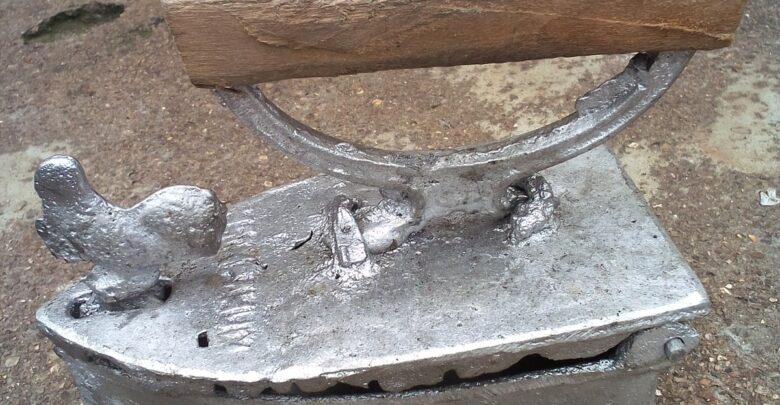
This is a charcoal iron (also called a box iron or coal iron): a hollow metal body filled with glowing charcoal or hot embers. Side openings and vents feed oxygen to the fire. A hinged lid — here fastened with a decorative rooster latch — keeps coals inside while the hot soleplate glides over cloth.
Before reliable electric irons, charcoal irons were used in many parts of the world. Compared with a solid “sad iron” that had to be constantly reheated on a stove, a charcoal iron could stay working longer on one fill. The trade-off was smoke, soot, and the need for careful handling so sparks did not scorch fabric.
The wooden grip stays cooler than the body. Animal-shaped latches and embossed lids added a little personality to an otherwise brutal piece of housework technology.
People often guess “lantern,” “incense burner,” or “chicken feeder” because of the vents and rooster — until they notice the pointed nose and flat pressing surface of a classic iron silhouette.
Fun fact: Some users tucked a piece of sheet metal or an inner pan between coals and the sole to reduce ash stains on white shirts.
Museum collections around the world still hold charcoal and ember irons because they bridge two eras: fire-based housework and the electric appliances that replaced it. Spot one in a courtyard or market stall, and you are looking at a portable, handheld furnace for shirts.
What old tool should we decode next? Comment below.
Sources
- https://commons.wikimedia.org/wiki/File:Fer_a_repasser_%C3%A0_charbon.jpg
- https://en.wikipedia.org/wiki/Clothes_iron
Image credit: CC BY-SA 4.0 (Dan). Source: https://commons.wikimedia.org/wiki/File:Fer_a_repasser_%C3%A0_charbon.jpg