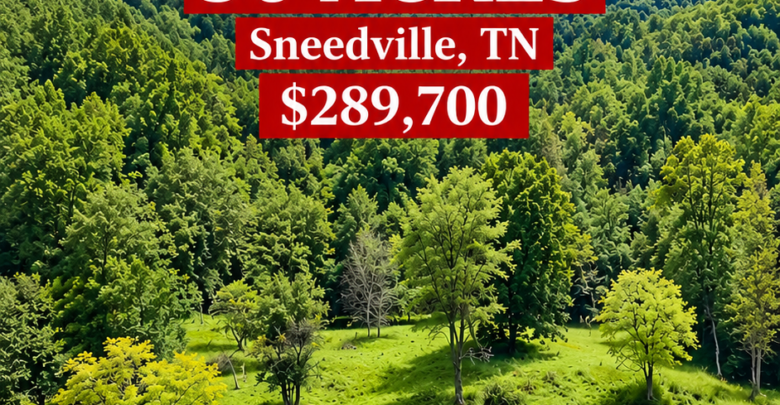
50 unrestricted acres in Sneedville, Tennessee, with open pasture, mature woods, rock ledges, a creek, a natural spring, and a waterfall, offered at $289,700.
Most land listings promise a little of something. A view. Some woods. Maybe a pond.
This one has almost everything.
On Cantwell Valley Road in Sneedville, Tennessee, 50 acres of unrestricted land combine open pasture, mature forest, rock ledges, a creek, a natural spring, and its own waterfall. The views stretch toward War Ridge, and the setting is about as peaceful as East Tennessee gets.
There is no house here yet. That is the opportunity.
Let’s walk the land piece by piece.
Property Overview
- Price: $289,700
- Address: 0 Cantwell Valley Rd, Sneedville, TN 37869
- Lot size: 50 acres
- Structures: none listed
- Land: unrestricted
- Terrain: open pasture, mature woodland, rock ledges
- Water features: creek, natural spring, waterfall
- Views: War Ridge
- County: Hancock County
Raw Land, Real Potential
The address starts with a zero. That is common for land without a house or assigned street number.
You are buying a blank canvas. No old house to tear down, no outdated systems, no one else’s layout to live with.
Whatever comes next on this land is up to you.
Unrestricted Land
The listing highlights that the land is unrestricted, in capital letters.
That means no HOA and no deed covenants telling you what size home to build, whether you can keep animals, or what your barn has to look like.
For homesteaders and farmers, that freedom is a big deal.
Unrestricted doesn’t mean unregulated. County building codes, septic permits, and state rules still apply. But you will have far more control than in a subdivision.
The Diverse Terrain
The listing opens by pointing out how varied the land is, and that variety is one of its biggest strengths.
Many 50-acre tracts are all woods, or all pasture, or all steep hillside. This one blends several types of land together.
That gives you space to build, space to farm, and space to simply enjoy nature, all on one property.
The Open Pastures
Part of the land is wide-open pasture.
Pasture is the most usable land on any farm. It is where you graze cattle, goats, or horses. It is where you plant a garden or an orchard. And it is often the easiest place to build a home.
Clearing forest to make pasture is slow and expensive. Having it already open saves time and money.
Ask how much of the 50 acres is pasture and whether it has been grazed or cut for hay recently.
The Mature Woodlands
The rest of the land includes mature, quiet woodland.
Mature forest provides privacy, shade, wildlife habitat, and firewood. It can also hold timber value.
If timber interests you, a professional forester can estimate the value of the standing trees. Some buyers use a careful timber harvest to help offset part of their purchase cost. Others leave the forest untouched for its beauty.
The Rock Ledges
The property features rock ledges.
Ledges add drama and character to a landscape. They create natural overlooks, shaded hollows, and interesting spots for hiking and exploring.
They can also affect building and roads. Rock near the surface can complicate septic systems and foundations. Keep that in mind as you choose a building site.
The Waterfall
This is the feature that makes the listing stand out.
The property has its own waterfall.
Owning a waterfall is rare. It turns a piece of land into a destination. Imagine a walking trail that ends at the falls, a bench nearby, or a cabin placed so you can hear the water from the porch.
Ask how the waterfall flows through the seasons. Some falls run strong all year. Others are seasonal, roaring after rain and quieter in late summer.
The Creek
A creek flows right through the heart of the property.
The listing calls it musical, and running water does bring a soothing sound to any setting.
A creek is valuable for livestock, wildlife, and recreation. It also deserves careful planning. Ask about flooding history and whether any part of the land sits in a flood zone. Build well above the creek and away from any low ground.
If you need to cross the creek to reach part of the land, find out whether there is already a crossing or bridge.
The Natural Spring
The land includes a natural spring, which the listing describes as clean.
For a homesteader, a spring is a huge asset. Historically, many farms in Appalachia were built around springs as their main water source.
Before relying on it for drinking water, have it tested for bacteria and contaminants. Spring water can be excellent, but it can also be affected by surface runoff, animals, and weather.
Many buyers use a spring for livestock and gardens, and drill a well or connect to public water for the house.
The War Ridge Views
The listing highlights sweeping views of War Ridge.
Views like this are one of the main reasons people buy mountain land. They also add lasting value to any home you build.
Walk the property to find the best view. The ideal home site is often where you can see the ridge and still have easy access to the road.
Wildlife
With pasture, woods, water, and ledges together, this land offers excellent habitat.
Land like this in East Tennessee commonly supports deer, wild turkey, small game, and many types of birds.
For hunters, 50 acres is enough room to hunt on your own property. Check Tennessee hunting rules and seasons before you do.
Choosing a Building Site
Picking the right place for a home is one of the most important decisions you will make here.
Consider the view, the slope, the distance from the road, sun exposure, and access to power. Stay well away from the creek’s flood area.
Most important, make sure the site can support a septic system. In rocky terrain, that is not guaranteed.
Septic and Soil Testing
Before you buy raw land to build on, find out whether it can pass a soil test for septic.
In Tennessee, septic systems for new homes require a soil evaluation and permit, usually through the state’s environmental agency or local office.
Ask whether any soil testing has been done. If not, consider making your offer contingent on a successful perc or soil test. Rock ledges and shallow soils can limit where a septic system can go.
Water for a Home
You have a few options for household water.
You could develop the spring. You could drill a well. Or, if public water is available on Cantwell Valley Road, you could connect to it.
Ask what is available at the road and get an estimate for a well if needed. Well costs vary with depth.
Power and Utilities
Ask whether electricity runs along the road and how far it is from your preferred home site.
Running power a long distance into rural land can be expensive. Some buyers go partially or fully off-grid with solar, especially for cabins or homesteads.
Also check internet and cell coverage. Remote valleys in East Tennessee can have limited service.
Access and Roads
Find out how you reach the land and how far the road frontage runs.
Is there an existing driveway, a farm road, or a field gate? Is the access year-round in wet weather?
Building a driveway into a home site can be a big expense, especially with creek crossings and rock. Get an estimate before you commit to a site.
Building a Dream Homestead
The listing suggests three paths. The first is a secluded dream homestead.
With privacy, views, a spring, and pasture, this land fits that vision well. You could build a farmhouse overlooking War Ridge, a log home in the trees, or a modest cabin near the creek.
A Self-Reliant Farm
The second path is a self-reliant farm.
Pasture for animals. Woods for firewood and timber. A spring and creek for water. Plenty of land for gardens, orchards, and hay.
That combination is exactly what people look for when they want to grow and raise more of their own food.
A Recreational Retreat
The third path is a recreational retreat.
Even without building a full home, this land could be a weekend escape. Hiking to the waterfall, hunting in the fall, camping by the creek, and enjoying the views.
Many buyers start with camping or a small cabin, then build a larger home later.
Possible Projects and Improvements
- Get a soil test for septic on a preferred home site
- Build a driveway to the best view
- Bring in power or install solar
- Drill a well or develop the spring
- Build a cabin or main home
- Add a barn and fencing for livestock
- Cut a walking trail to the waterfall
- Plant a garden and orchard in the pasture
- Build a creek crossing if needed
- Set up food plots and stands for hunting
Financing Raw Land
Buying land is different from buying a house.
Cash is the simplest and most common way to buy raw land.
Land loans are available from some banks, but they usually require bigger down payments and shorter terms than home mortgages.
Farm and land lenders, such as Farm Credit associations, specialize in rural land and are often the best fit for a tract like this.
Seller financing is sometimes available on land. It never hurts to ask.
Construction loans can help when you are ready to build. Some lenders offer construction-to-permanent loans that cover building and then convert to a mortgage.
USDA and FHA generally don’t finance raw land alone, but some programs can help once you are building a home.
Insurance and Liability
Even undeveloped land carries some liability.
A waterfall, ledges, and a creek are beautiful, but they can be dangerous for visitors and trespassers. Consider a land liability policy, which is usually affordable.
Once you build, you will need homeowners coverage. Ask insurers about distance to fire services in a remote area.
Tennessee Greenbelt
At 50 acres, this property may qualify for Tennessee’s Greenbelt program, which can lower property taxes on agricultural or forest land.
Ask the Hancock County assessor whether the land is enrolled now. If it is, find out what is required to keep it enrolled and whether rollback taxes could apply if the use changes.
Questions to Ask Before Making an Offer
- How much of the land is pasture and how much is woods?
- Has any soil or perc testing been done?
- Is power available at the road?
- Is public water available, or would you need a well?
- Has the spring water ever been tested?
- Does the waterfall flow year-round?
- Has the creek ever flooded?
- Is any part of the land in a flood zone?
- How long is the road frontage?
- Is there an existing driveway or access road?
- Is there a recent survey?
- Are there any easements or rights of way?
- Is the land enrolled in Greenbelt?
- Has timber ever been harvested?
- Are mineral rights included?
Due Diligence Is Essential
With land, there is no home inspection. Your due diligence takes a different form.
Get a survey to confirm the boundaries and acreage. Order a title search and title insurance. Arrange a soil test for septic on your planned home site.
Walk the land in person, ideally more than once and in different weather. Land can look very different after a heavy rain.
Check access, utilities, and any easements. These details decide whether your plans are practical and affordable.
Sneedville and Hancock County
Sneedville is the county seat of Hancock County, in the far northeastern corner of Tennessee near the Virginia line.
It is one of the most rural and least populated parts of the state. The area is known for its rugged ridges, deep valleys, and the Clinch River, a favorite for fishing and paddling.
Hancock County also has a rich Appalachian history and culture.
Life here is quiet. Shopping and services are limited locally, so larger trips are a drive away. Kingsport, Morristown, and the Tri-Cities area are within reach for bigger needs.
For buyers seeking true seclusion, that remoteness is the appeal.
Tennessee has no state income tax on wages, which also draws buyers from other states.
The Price in Context
At $289,700, the land works out to about $5,800 per acre.
For 50 unrestricted acres with pasture, woods, a creek, a spring, and a waterfall, that is a compelling price in today’s land market.
Remember to budget for the full picture. A driveway, power, well or water connection, septic, and the home itself can add up well beyond the land price. Plan your total cost, not just the purchase.
Who This Property Is For
Homesteaders who want to live more self-reliantly.
Buyers who want to build a private home with mountain views.
Hunters and outdoor lovers seeking their own retreat.
Families planning a long-term legacy property.
Anyone who has dreamed of owning a waterfall.
Final Thoughts
This 50-acre tract on Cantwell Valley Road brings together pasture, forest, rock ledges, a creek, a spring, and a waterfall in one unrestricted property.
It is the kind of land that feels like it was designed by nature for people who want peace, privacy, and room to build something of their own.
Do your homework on access, utilities, and septic. Walk the land. Listen to the creek. Find your view of War Ridge.
If it all lines up, this could be the place where your next chapter begins.


View the full listing on Zillow
Our website is designed for informational and entertainment purposes only. We are not a real estate brokerage or licensed contracting service. We operate solely as an independent blog, curating interesting houses, DIY guides, and practical home tips found across the internet. All decisions related to real estate transactions or home renovations should be made in consultation with licensed professionals. We do not guarantee the ongoing accuracy or availability of external property listings, as market statuses change rapidly. Please use our content at your own discretion.