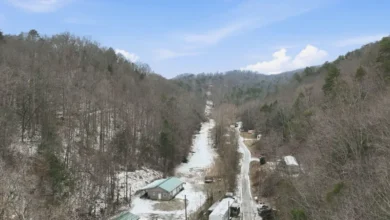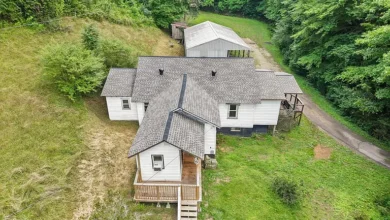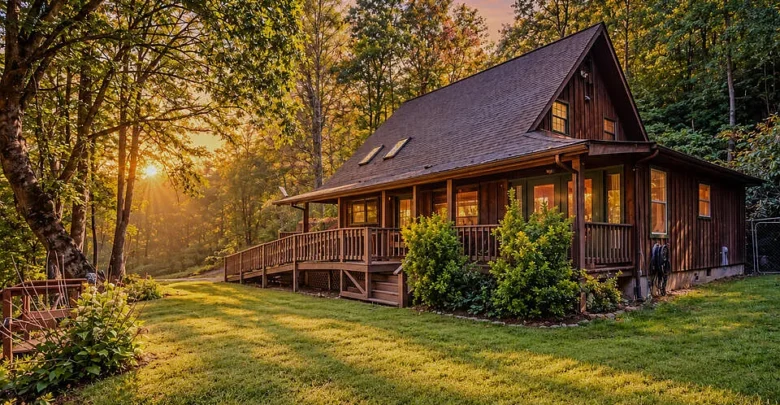
A 1973 mountain cabin on Scataway Creek in Hiawassee, Georgia, listed at $284,888.
Some houses sell you on granite countertops. This one sells you on a sound.
At 788 Fox Road in Hiawassee, Georgia, the first thing you notice is not the roofline or the porch. It is the creek. Roughly 115 feet of Scataway Creek runs along this property, and according to the listing, you can hear it roaring from the front porch.
The cabin itself was built in 1973. It offers four bedrooms, two full bathrooms, an upstairs office, cathedral ceilings, and a garage/shed area, all sitting on just over one acre in the North Georgia Mountains.
The asking price is $284,888.
For a four-bedroom creekfront cabin in one of the most popular mountain recreation areas in the Southeast, that number deserves a closer look. Let’s walk through what this property offers, what questions a smart buyer should ask, and how it might fit different kinds of owners.
Property Overview
Here are the key details as listed:
- Address: 788 Fox Rd, Hiawassee, GA 30546
- Price: $284,888
- Bedrooms: 4
- Bathrooms: 2 full
- Year built: 1973
- Lot size: 1.04 acres
- Water frontage: approximately 115 feet on Scataway Creek
- Additional space: upstairs office
- Living room: open layout with cathedral ceilings
- Kitchen: galley-style, connected to the laundry room
- Outbuilding: garage/shed area for storage and workspace
- Showings: by appointment only, no drive-bys
The interior living area is listed at just under 1,200 square feet. That is a modest footprint for four bedrooms, which tells you right away that this is a true cabin layout, efficient and cozy rather than sprawling.
The Setting: A Cabin Built Around the Creek
Water changes how a property feels. It also changes how it lives.
The listing describes this home as private and secluded, with the creek as the centerpiece of daily life. Morning coffee on the front porch. Evenings outside with family. The steady background noise of moving water instead of traffic.
For many buyers looking in the North Georgia Mountains, creek frontage is near the top of the wish list. Lake frontage on Chatuge tends to command premium prices, while creekfront parcels can offer a similar connection to water at a fraction of the cost.
Roughly 115 feet of frontage is meaningful. It is enough to create a real outdoor living zone along the bank, whether that means a fire pit, a hammock between two trees, or simply a bench where you can listen to the water.
The Lot: Just Over One Acre
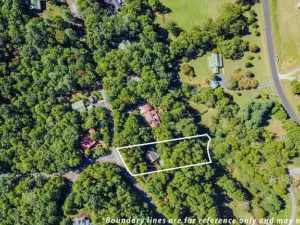
At 1.04 acres, this lot is large enough to feel private without becoming a burden to maintain.
In mountain areas, an acre can feel much larger than it does in the suburbs. Trees, topography, and water all create natural buffers between you and the outside world.
The listing mentions spacious outdoor areas surrounded by nature. That suggests there is usable ground for gatherings, gardening, or simply room for kids and dogs to roam.
Buyers should walk the entire parcel and ask for a survey if one is available. In hilly terrain, knowing exactly where the boundary lines fall, where the creek bank begins, and how much of the lot is flat and usable matters a great deal.
The Front Porch
Every good cabin needs a porch. This one appears to be the heart of the home’s appeal.
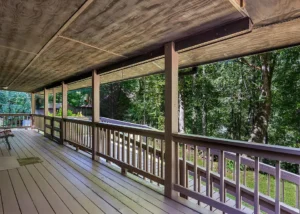
The listing specifically highlights mornings on the front porch with coffee while listening to the creek. That is not just marketing language. In a creekside home, the porch is where you actually spend your time from spring through fall.
When touring, check the condition of the porch decking, railings, and supports. Outdoor wood in a damp, shaded environment near moving water can wear faster than wood in drier locations. Small repairs here are common and usually affordable, but they are worth identifying early.
The Living Room
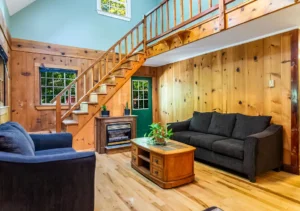
The main living space is described as large and open, with soaring cathedral ceilings.
Cathedral ceilings are a classic feature of 1970s mountain cabins, and they do a lot of work in a home of this size. They make a modest square footage feel open and airy. They draw the eye upward. And in a wood-heavy cabin interior, they create that unmistakable lodge atmosphere.
The listing calls it a warm and spacious gathering area with plenty of true cabin character. For buyers who want rustic charm rather than a renovated modern farmhouse look, that phrase is a good sign.
One practical note: tall ceilings can affect heating and cooling efficiency. Ask about how the living room stays comfortable in winter, and consider whether a ceiling fan could help push warm air back down.
The Kitchen
The kitchen is a galley-style layout.
Galley kitchens are often underrated. With work surfaces on two parallel walls, they keep everything within a step or two. Many professional cooks actually prefer this layout because it is so efficient.
The listing notes that the kitchen connects conveniently to the laundry room. That is a practical touch, especially in a cabin where muddy boots, wet towels, and creek-soaked clothing are part of everyday life.
Buyers should look at the age of the appliances, the condition of the cabinets, and the plumbing under the sink. In a home from 1973, the kitchen may have been updated at some point, or it may still have original elements. Either way, it is worth knowing before you make an offer.
The Laundry Room
Having a dedicated laundry room in a cabin of this size is a real advantage.
Many older mountain homes tuck the washer and dryer into a closet, a basement corner, or an unheated outbuilding. Here, the laundry is part of the main living flow, right next to the kitchen.
Check the dryer vent route and make sure it exhausts properly to the outside. This is a simple safety item that inspectors often flag in older homes.
The Bedrooms
Four bedrooms is the number that makes this listing stand out.
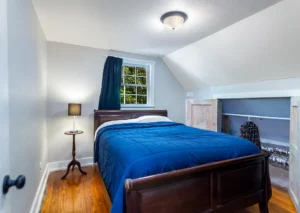
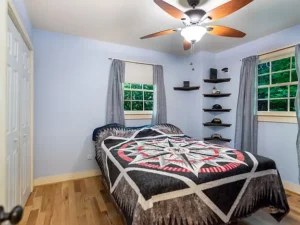
Two bedrooms are on the main level, and two more are upstairs. That split layout gives the home real flexibility.
A full-time owner could use the main-level bedrooms for themselves and keep the upstairs rooms for guests or grandchildren. A family using it as a weekend getaway could sleep a lot of people comfortably. Someone thinking about short-term rental income would see four bedrooms as a strong selling point for groups.
Given the overall square footage, the bedrooms are likely on the cozy side. Bring a tape measure if furniture size matters to you, and pay attention to ceiling height in the upstairs rooms, since cabin upper floors often have sloped ceilings under the roofline.
The Bathrooms
The home has two full bathrooms, one on each level.
That is an ideal arrangement for a split-bedroom layout. Guests upstairs have their own bathroom, and the main level stays independent.
In a home built in the early 1970s, look closely at the plumbing fixtures, the water pressure, and any signs of moisture around tubs, toilets, and showers. Ask whether the supply lines have been updated over the years.
The Upstairs Office
Beyond the four bedrooms, the listing mentions an additional office space upstairs.
For remote workers, this is a meaningful bonus. Working from a cabin with a creek running outside sounds like a dream, and having a separate space to do it keeps work from taking over the bedrooms or living room.
Internet service is the key question here. Rural mountain locations can have limited options. Before committing, confirm which providers serve Fox Road and what speeds are realistically available. If wired service is limited, satellite or cellular-based internet may be alternatives worth exploring.
The Garage and Shed Area
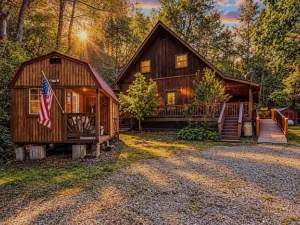
Outside, there is a garage/shed area described as additional workspace and storage.
The listing mentions tools, outdoor gear, and mountain toys. In practical terms, that could mean kayaks, fishing equipment, mowers, bikes, or a side-by-side.
Mountain living comes with a lot of equipment, and a cabin of this size does not have much indoor storage. This outbuilding will likely become one of the most useful spaces on the property.
Check the structure’s roof, foundation, and electrical service. Ask whether it has power and lighting, and whether it is secure enough to store valuable gear.
Roof
The listing does not mention the age of the roof.
That makes it one of the first questions to ask. In a heavily wooded mountain setting, roofs deal with falling leaves, pine needles, branches, and moss growth in shaded areas. A roof nearing the end of its life can be a significant expense, so knowing its age and condition helps you budget accurately.
Insurance companies also care about roof age, and an older roof can affect both your premium and whether certain carriers will write a policy at all.
Foundation and Structure
A cabin built in 1973 near a creek deserves careful attention below the floor.
Look for signs of moisture in any crawl space, check for proper drainage around the home, and watch for sagging floors or doors that do not close evenly. These can be signs of settling or water-related issues.
Mountain properties on slopes often sit on piers or partial foundations. Understanding exactly how this home is supported, and what condition those supports are in, is essential.
Heating and Cooling
The North Georgia Mountains have real winters. Snow is not unusual, and nights can get cold well into spring.
The listing does not describe the heating and cooling system, so ask about the type of system, its age, and recent service records. Many mountain cabins rely on heat pumps, propane, or wood stoves, and some use a combination.
If there is a wood stove or fireplace, ask when the chimney was last inspected and cleaned. Request recent utility bills to get a realistic sense of monthly costs in both summer and winter.
Water and Septic
Many rural properties in Towns County are served by private wells and septic systems rather than public utilities.
Confirm the water source for this home. If it uses a well, have the water tested for quality and the flow rate checked.
If it uses septic, a septic inspection is highly recommended. Systems near water need to be functioning properly, and older systems may need maintenance or upgrades. Ask when the tank was last pumped and whether any records exist.
Electrical and Plumbing
Homes from the early 1970s were built to the standards of their time.
Ask whether the electrical panel has been updated and whether the wiring meets current needs. A modern household with a home office, multiple devices, and window units or heat pumps draws far more power than a cabin did in 1973.
The same goes for plumbing. Knowing what materials the supply and drain lines are made of helps you anticipate future repairs.
Flooring and Interior Finishes
The listing focuses on the cabin’s character rather than specific finishes, so a walkthrough will tell you the most.
Look at floors in high-traffic and wet areas, especially the kitchen, laundry, and bathrooms. Check wall surfaces for water stains. Note any areas where cosmetic updates would make a big difference.
Cosmetic work is where a lot of buyers find value in older cabins. Fresh paint, new light fixtures, and updated flooring can transform a space without a massive budget.
Creek Frontage: Benefits and Responsibilities
Owning land along moving water is a joy, but it comes with responsibilities worth understanding before you buy.
Creek banks can shift over time, especially after heavy rains. Ask the seller about the creek’s behavior during storms and whether water has ever approached the house or outbuildings.
Check whether any part of the property sits in a designated flood zone. FEMA flood maps are publicly available, and your lender and insurance agent will check this anyway. Knowing early helps you avoid surprises.
Local and state rules may also limit what you can build or clear near the water. If you have plans for a dock, deck, or bank improvements, check with Towns County before closing.
Insurance Considerations
Insurance deserves its own conversation for a property like this.
Start by getting homeowners insurance quotes early in your process, not after you are under contract. Older homes, wooded settings, and water frontage can all affect rates.
Flood insurance is the big one. Even if the home is not in a high-risk flood zone, creekfront owners often choose to carry a policy for peace of mind. If the home is in a designated flood zone and you use a federally backed mortgage, flood insurance will likely be required.
Ask your agent about wind and falling tree coverage as well. In heavily wooded mountain areas, storm damage from trees is one of the most common claims.
Financing Options
At $284,888, this property is within reach for a wide range of buyers. Here are the common financing paths to explore with a lender.
Conventional loans. These are the most common choice for buyers with good credit and a solid down payment. Conventional loans can also be used for second homes and investment properties, which matters if you are not planning to live here full time.
FHA loans. FHA financing allows lower down payments and more flexible credit requirements. It is designed for primary residences, and the home must meet certain property standards, so an older cabin may need minor repairs before closing.
VA loans. Eligible veterans and service members may be able to buy with no down payment. Like FHA, VA loans are for primary residences and have their own property condition requirements.
USDA loans. Much of rural North Georgia may fall within USDA-eligible areas. These loans can offer zero-down financing for qualifying buyers with moderate incomes. Check the address on the USDA eligibility map and confirm your household income fits the program limits.
FHA 203(k) renovation loans. If you want to update the cabin right away, a 203(k) loan lets you roll the cost of certain improvements into your mortgage. This can be a smart tool for buyers who love the location but want to modernize the kitchen, bathrooms, or systems.
Talk to more than one lender. Rates, fees, and comfort with rural and older properties vary from one lender to the next.
Living Here Full Time
For a full-time resident, this cabin offers something many people search years to find: peace and quiet with real water on your doorstep.
The two main-level bedrooms and full bath mean you could live comfortably on one floor, which is helpful for buyers thinking long term about aging in place.
Hiawassee is a small mountain town, but it offers everyday essentials, local restaurants, and a strong sense of community. Larger shopping and services are available in surrounding towns, so some driving is part of life here.
Full-time owners should think about winter access. Ask how Fox Road is maintained in snow and ice, and how steep the driveway is.
Using It as a Weekend Getaway
As a second home, this property checks many boxes.
Four bedrooms means room for family and friends. The creek provides built-in entertainment. And the surrounding area is packed with things to do.
The main thing weekend owners need to plan for is maintenance while they are away. Someone should check on the property after big storms, keep an eye on pipes during hard freezes, and handle yard work during the growing season.
Rental Potential
The North Georgia Mountains are a popular destination for cabin rentals, and creekfront cabins tend to stand out in listings.
A four-bedroom layout can attract families and groups, and the creek, porch, and outdoor space give guests exactly what they come to the mountains for.
Before buying with rental income in mind, check Towns County regulations on short-term rentals, any applicable taxes, and whether there are deed restrictions or HOA rules affecting the property. Also budget for furnishing, cleaning, insurance designed for rentals, and possible updates to make the cabin guest-ready.
Long-term rentals are another option, especially for local workers looking for housing in a tight mountain market.
Renovation Ideas
A 1973 cabin offers plenty of room to make it your own. Depending on condition and budget, consider:
- Refreshing the galley kitchen with new countertops, cabinet paint, and lighting
- Updating bathroom fixtures, vanities, and tile
- Adding a screened section to the porch to enjoy the creek without bugs
- Installing ceiling fans to improve airflow under the cathedral ceilings
- Building a fire pit or seating area near the creek bank
- Upgrading insulation and windows to improve winter comfort
- Adding electrical service or lighting to the garage/shed area
- Refinishing or replacing worn flooring
Prioritize safety and systems first, then cosmetic upgrades. A great-looking kitchen does not help much if the roof or septic needs attention.
Questions to Ask Before Making an Offer
Here is a due diligence checklist tailored to this property:
- How old is the roof, and has it had any repairs?
- What type of heating and cooling system does the home use, and how old is it?
- Is the home on a private well or public water?
- Is the home on septic, and when was it last pumped or inspected?
- Is any part of the property in a FEMA flood zone?
- Has the creek ever flooded near the house, garage, or shed?
- Has the electrical panel been updated?
- What are the average monthly utility costs?
- Which internet providers serve the property?
- How is Fox Road maintained in winter?
- Are there any HOA rules, deed restrictions, or easements?
- What are the annual property taxes?
- Is a survey available showing boundaries and the creek line?
- Are short-term rentals permitted at this location?
- Will any furniture or equipment convey with the sale?
Inspection Is Essential
No matter how charming a cabin feels, a professional inspection is non-negotiable.
For this property, a general home inspection is the starting point. Depending on what the inspector finds, you may also want specialized inspections for the septic system, well water, roof, chimney, and pest activity.
Wood-destroying insects are common in wooded Southern settings, and a termite inspection is often required by lenders anyway.
Moisture is the other key concern. Ask the inspector to pay special attention to the crawl space, foundation, and any areas closest to the creek.
Inspection costs are small compared to the price of a surprise repair after closing.
The Price in Context
At $284,888, this property sits at an interesting point in the Hiawassee market.
Lakefront homes on Chatuge and newer mountain builds often sell for considerably more. Smaller cabins without water access can sometimes be found for less. This listing offers a combination that is harder to find at this price: four bedrooms, over an acre, and real creek frontage.
The trade-offs are the home’s age and its modest square footage. A buyer should factor in the cost of any needed updates when comparing it to newer homes.
Your agent can pull recent comparable sales in the area to show how this price lines up with similar properties. Pay attention to sales of other creekfront homes in Towns County, since water access can shift values significantly.
The Surrounding Area
Location is a big part of what makes this listing appealing.
Lake Chatuge is nearby for boating, kayaking, fishing, and lazy summer days on the water. The Hiwassee River offers more opportunities for paddling and fishing.
Hikers can explore Brasstown Bald, the highest point in Georgia, along with Bell Mountain, High Shoals Falls, and nearby sections of the Appalachian Trail. Hamilton Gardens offers a gentler outing, especially beautiful when the rhododendrons bloom.
Wine lovers have local options too, including Hightower Creek Vineyards in Hiawassee and Crane Creek Vineyards in nearby Young Harris.
And when it is time to eat, the Hiawassee and Young Harris area offers everything from casual mountain diners to restaurants with views of Lake Chatuge.
Who This Home Fits Best
This property could be a strong match for:
- Buyers who want water access without lakefront prices
- Families looking for a weekend mountain retreat with room for everyone
- Remote workers who want a dedicated office in a peaceful setting
- Retirees seeking one-level living options with guest space upstairs
- Investors exploring the North Georgia cabin rental market
- Anyone who loves classic cabin character over modern construction
It may be less ideal for buyers who need a large home, want a move-in-ready modern renovation, or prefer to be within walking distance of town.
Showing Notes
The listing is clear on one point: no drive-bys.
That usually means the property sits on a private road, has privacy concerns for current occupants, or simply requires an appointment to view. Respect the request and contact the listing agent to schedule a showing.
Final Thoughts
788 Fox Road is not a flashy property. It is a 1973 cabin with a galley kitchen, cozy bedrooms, and modest square footage.
But it has something many expensive homes do not: about 115 feet of rushing creek, a front porch built for listening to it, and an acre of privacy in one of the most beautiful corners of Georgia.
For the right buyer, those things matter more than square footage.
Do your homework on the roof, systems, septic, and flood risk. Get insurance quotes early. Bring a good inspector. If the numbers and the condition line up, this could be the kind of place where you stop checking your phone and start listening to the water again.

View the full listing on Zillow: 788 Fox Rd, Hiawassee, GA 30546
Our website is designed for informational and entertainment purposes only. We are not a real estate brokerage or licensed contracting service. We operate solely as an independent blog, curating interesting houses, DIY guides, and practical home tips found across the internet. All decisions related to real estate transactions or home renovations should be made in consultation with licensed professionals. We do not guarantee the ongoing accuracy or availability of external property listings, as market statuses change rapidly. Please use our content at your own discretion.